
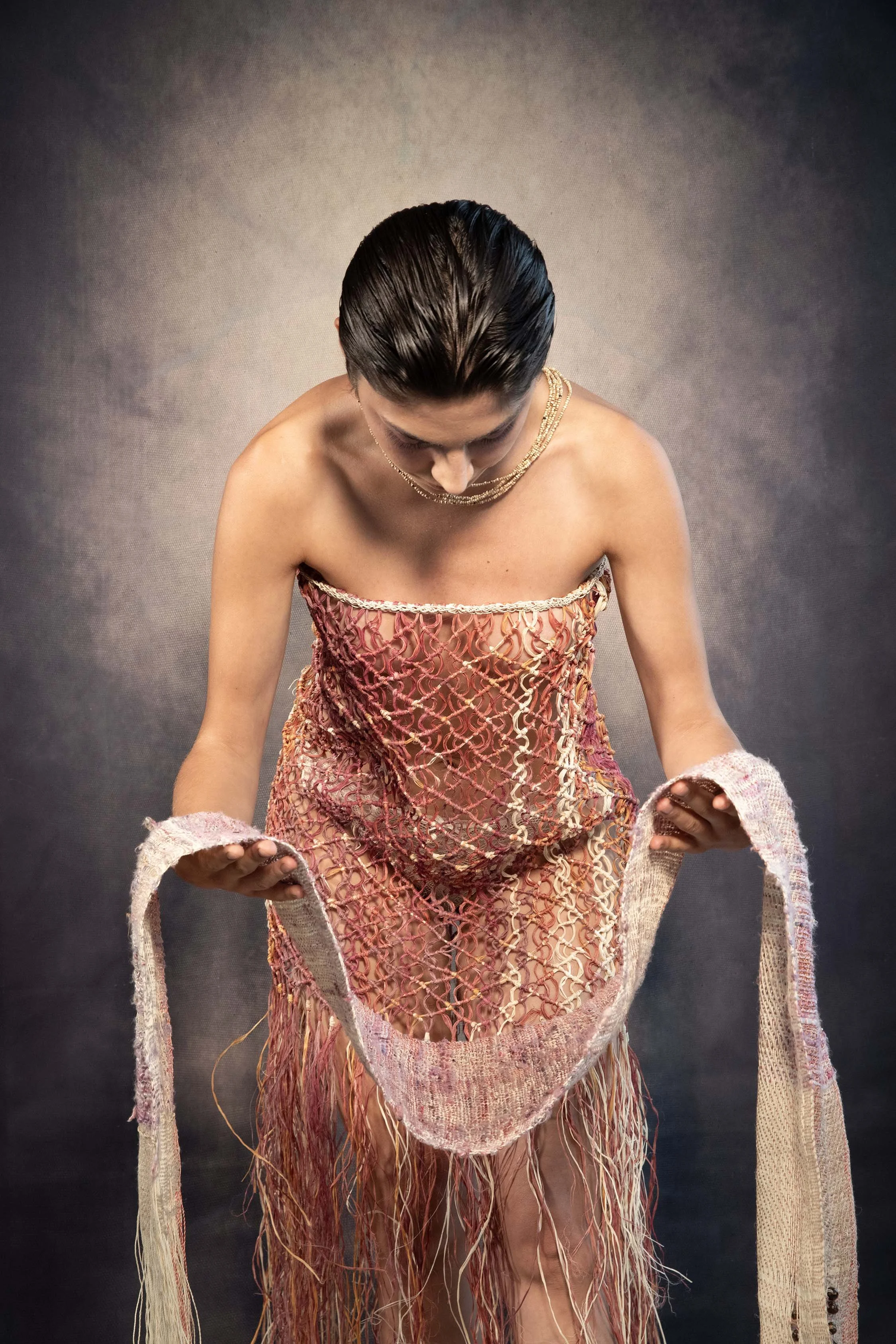
The Daughter of the Snake
2025, Master Thesis, Polimoda, Firenze
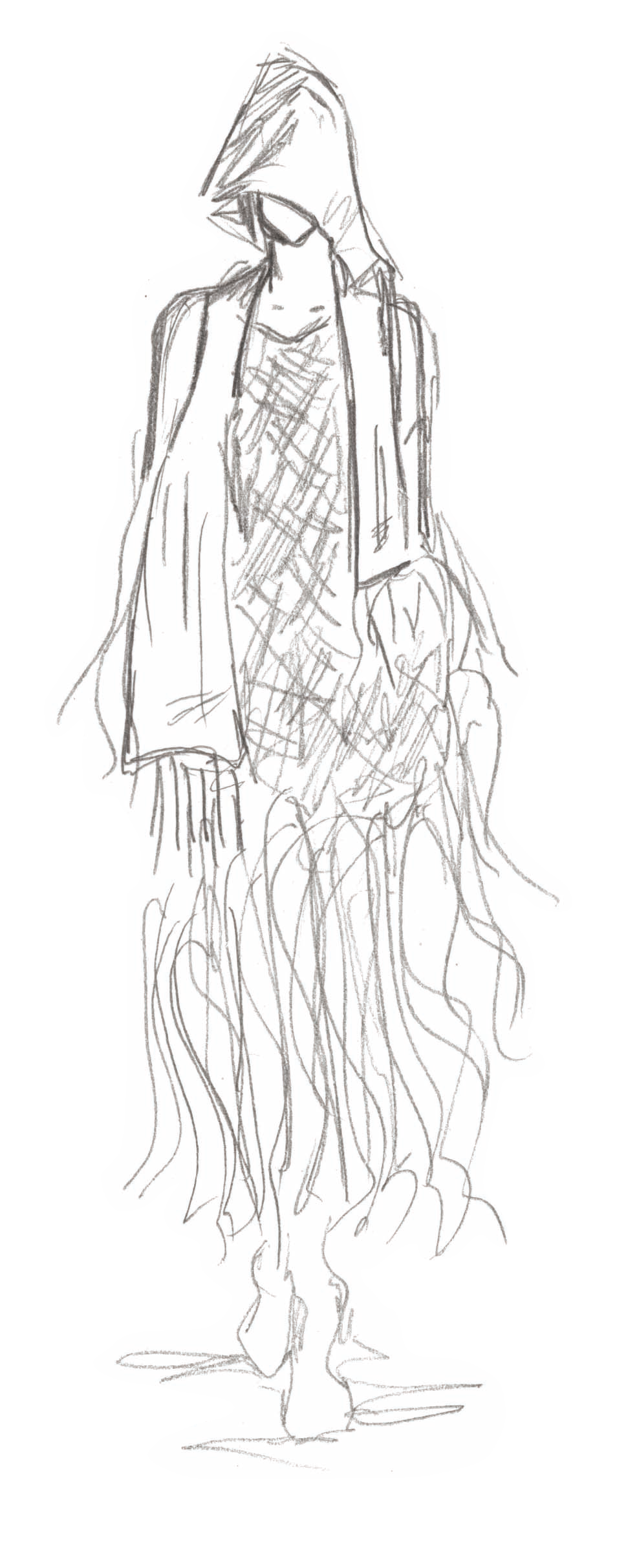
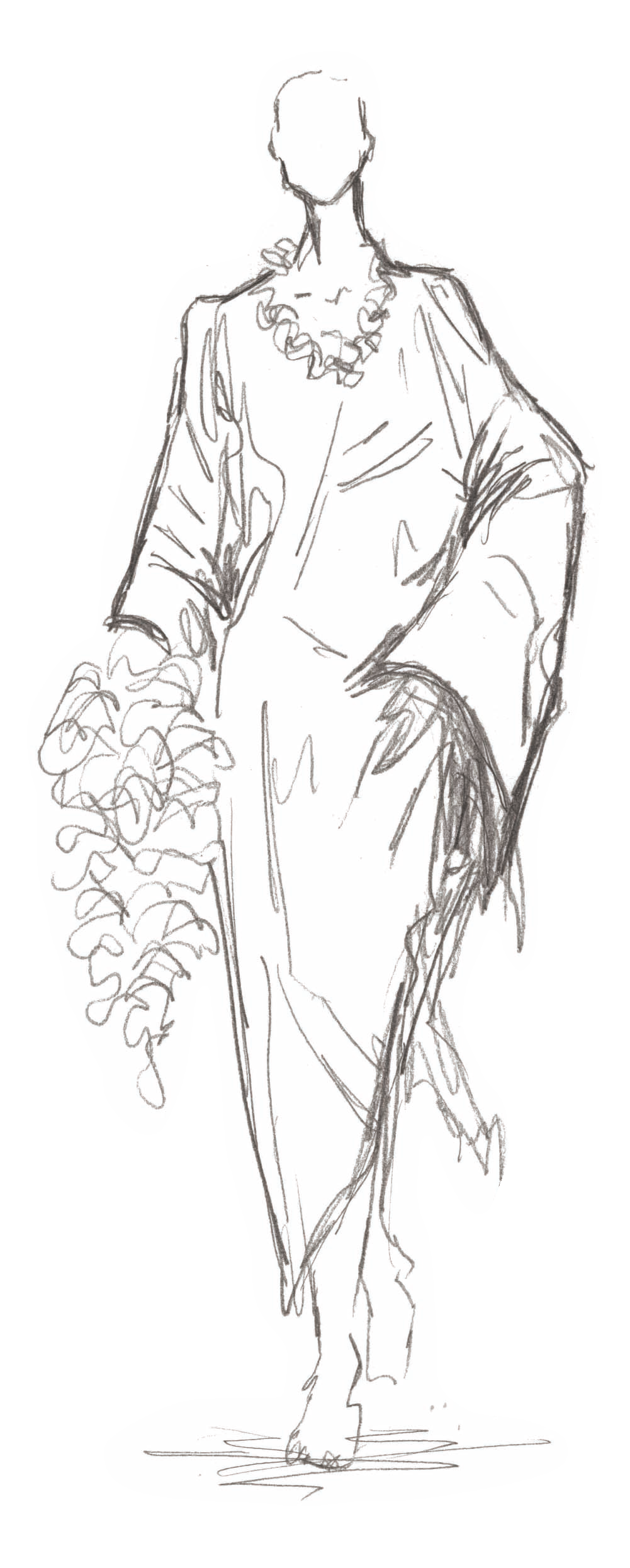
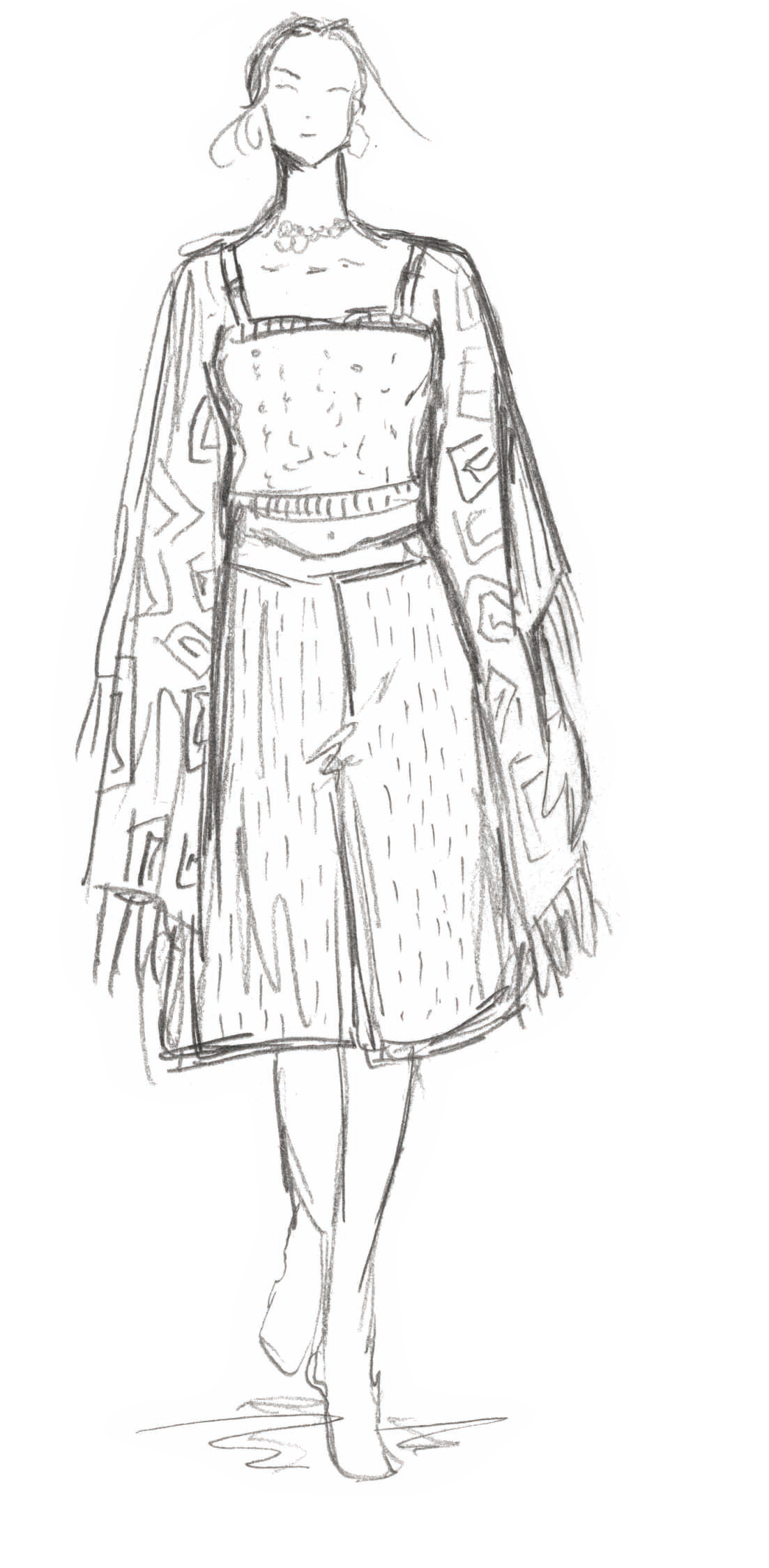
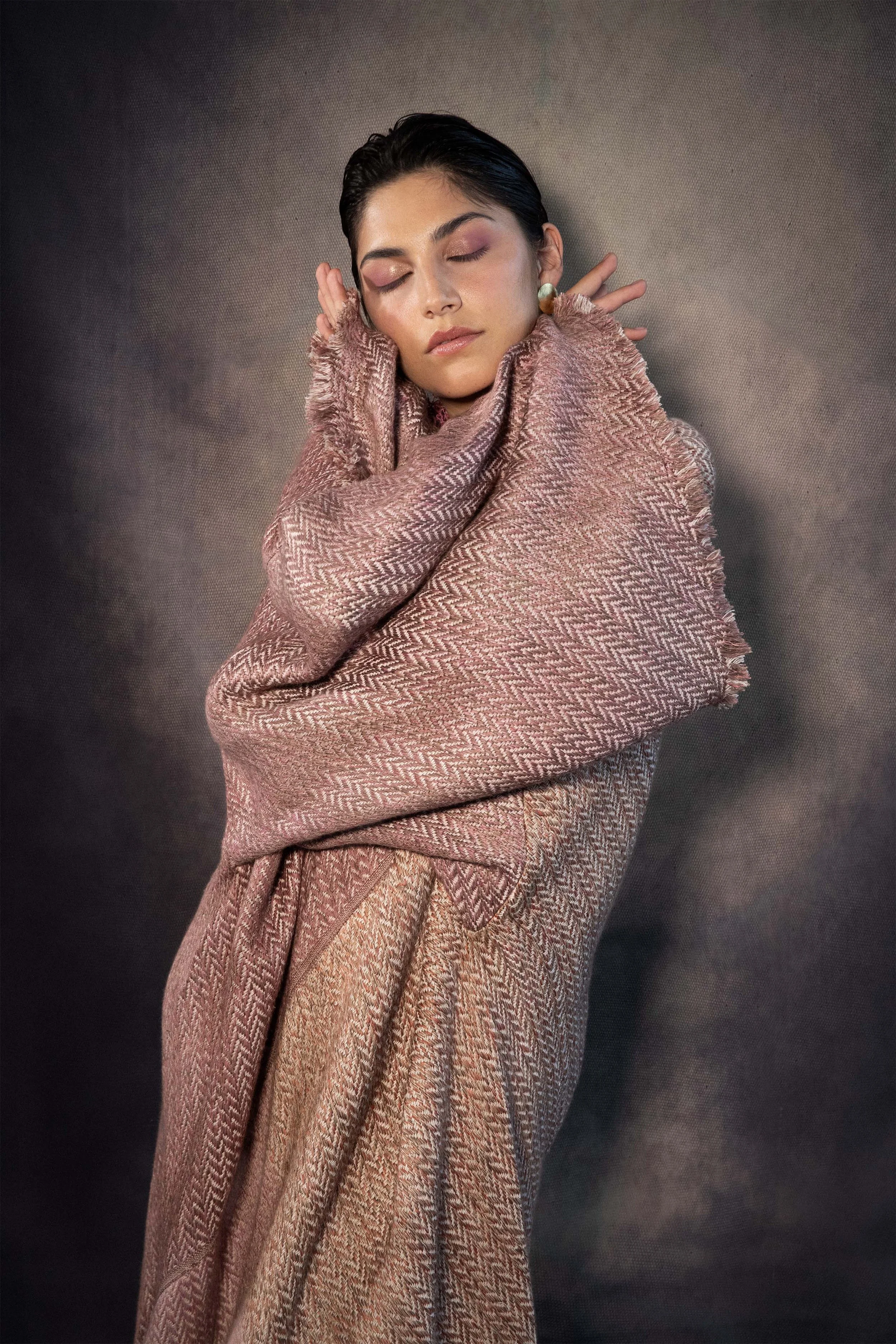
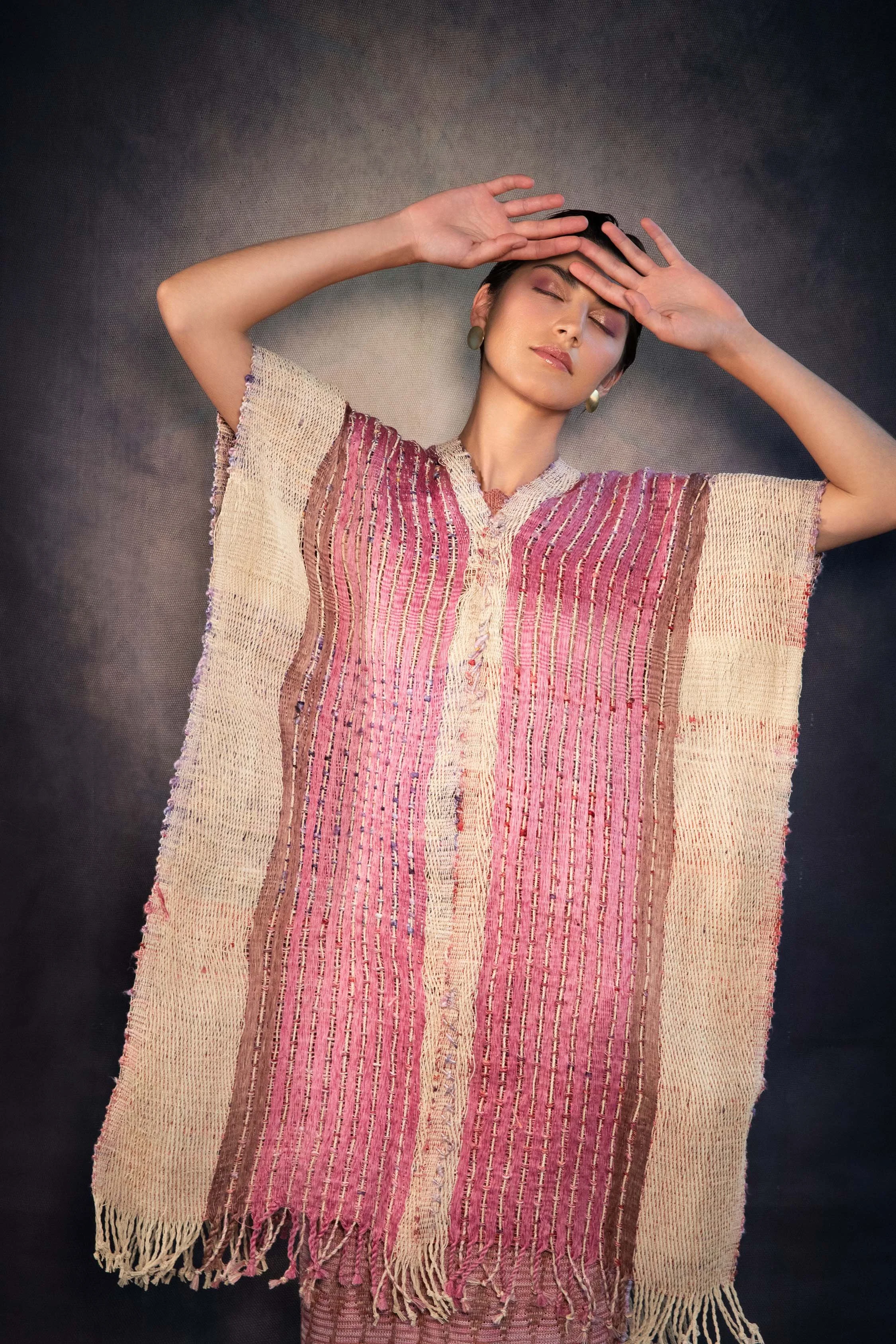
This six-look collection is a fully handmade body of work that follows a Farm to Fabric to Fashion approach, from the initial gathering of raw materials in the Amazon rainforest to the final stitching in Florence, Italy. The entire production process is the result of care, excellence, precision, and devotion to craft.
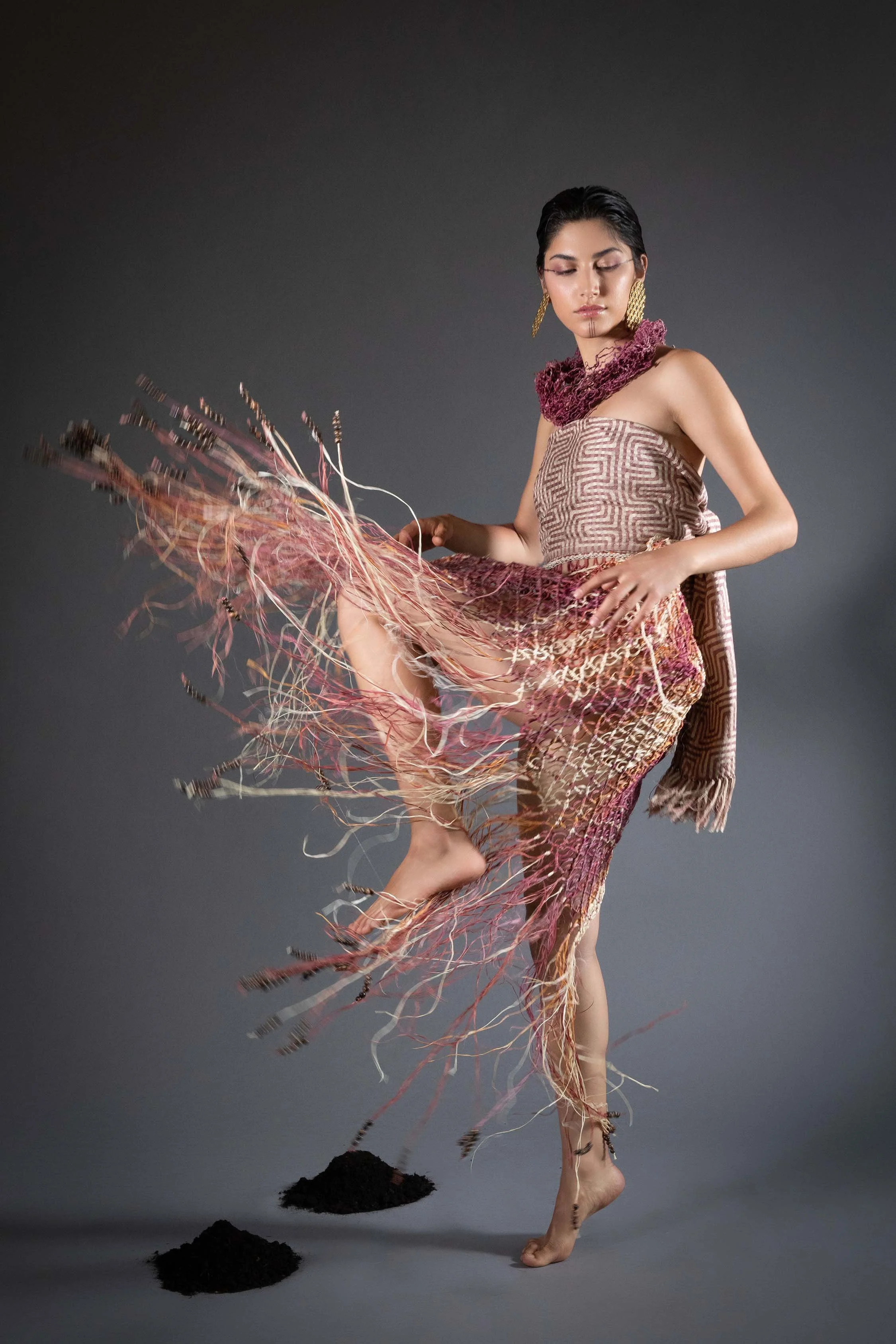
It takes its pulse from the heart of the jungle, where time tangles with roots and the river sings prayers to the wind. There, the Daughter of the Snake awakens in the designer’s consciousness. Her skin is a living codex, a map inscribed with the memories of her ancestors, spiritual routes travelled by Indigenous women in search of the Earth’s essence. In a sacred rite, her body dances with the fire of transformation and reincarnation. Like Santamaría Querubín’s material expressions, she coils, twists and slips between shadows and light…
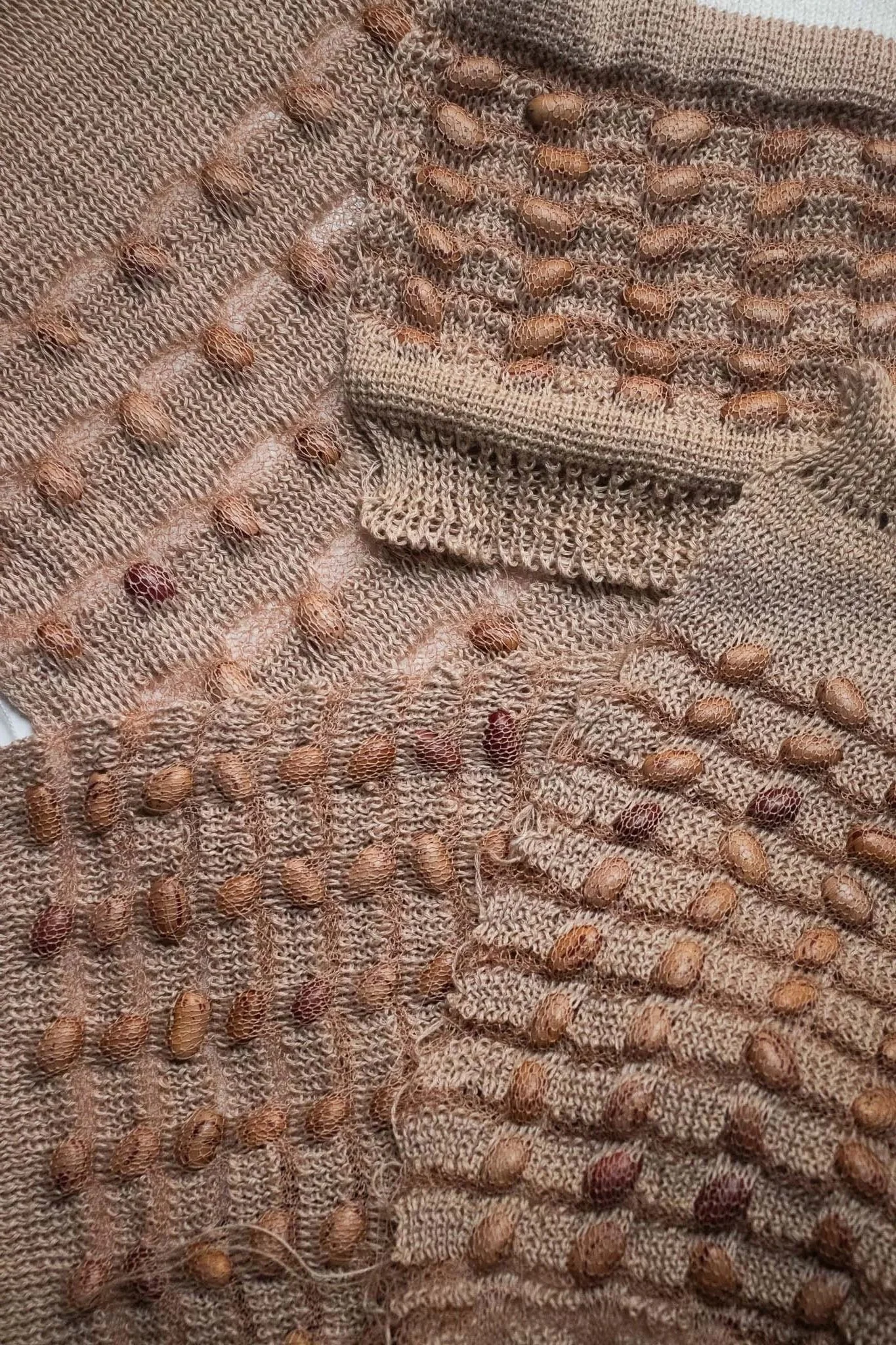
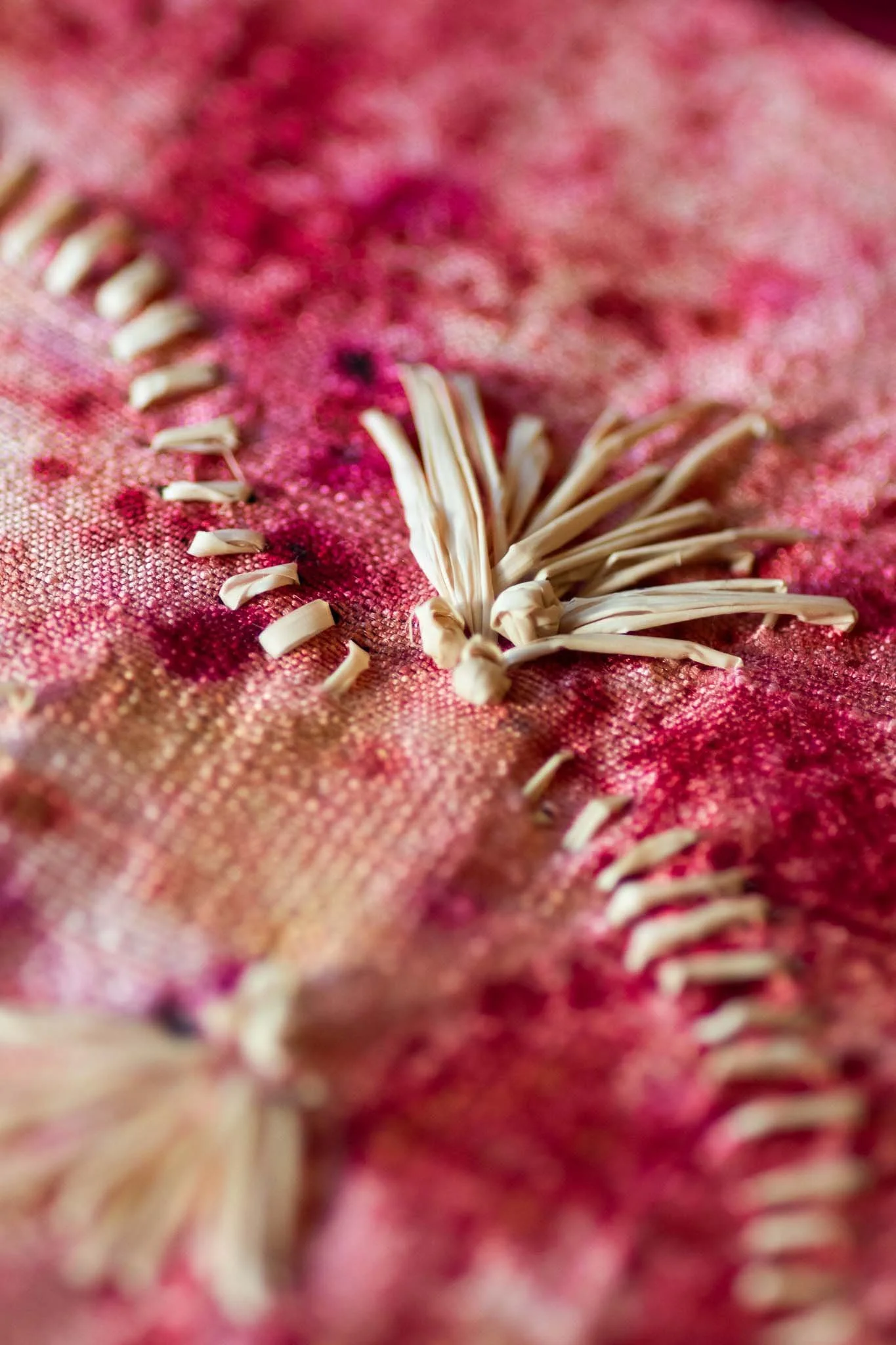
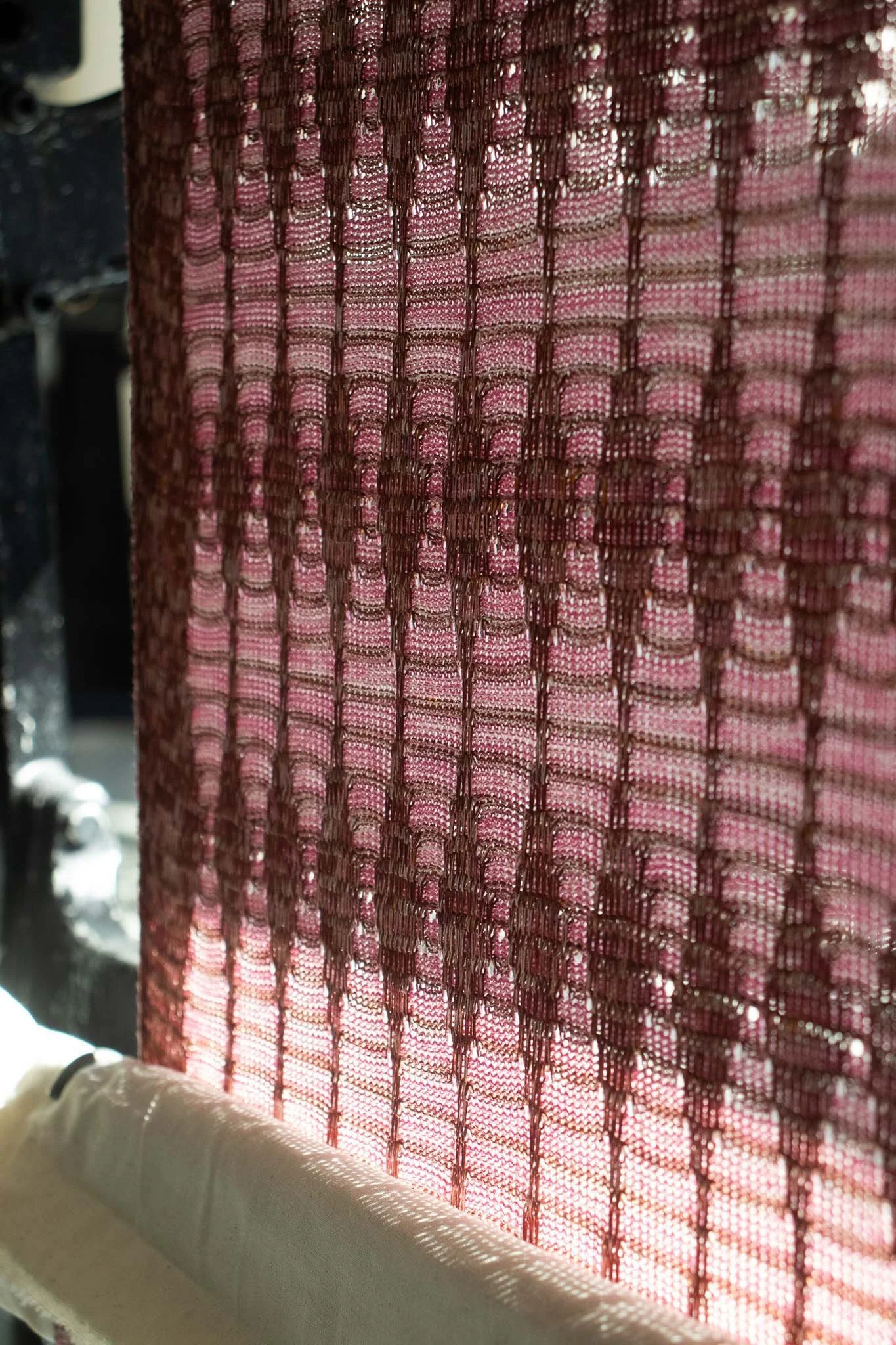
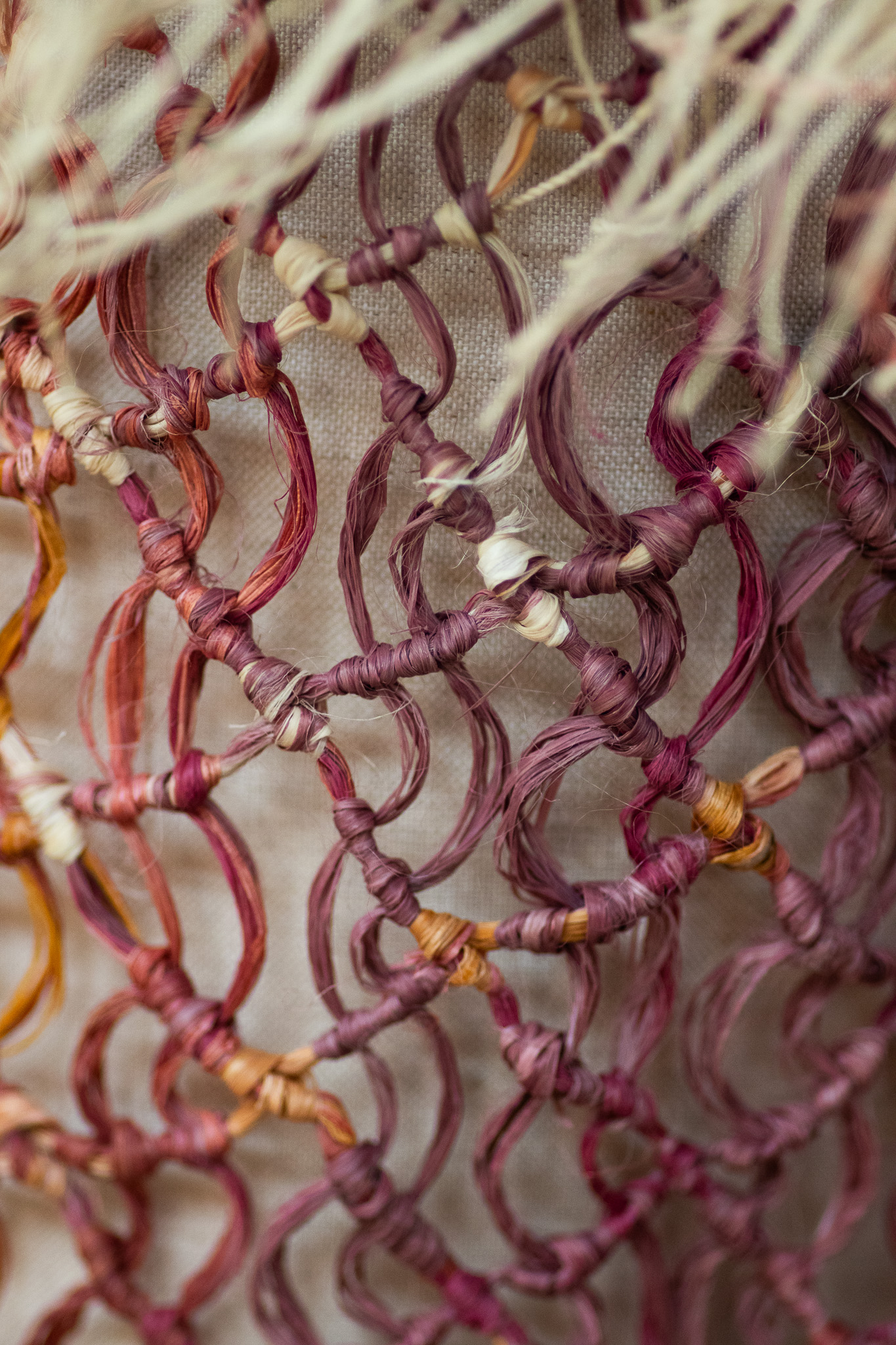
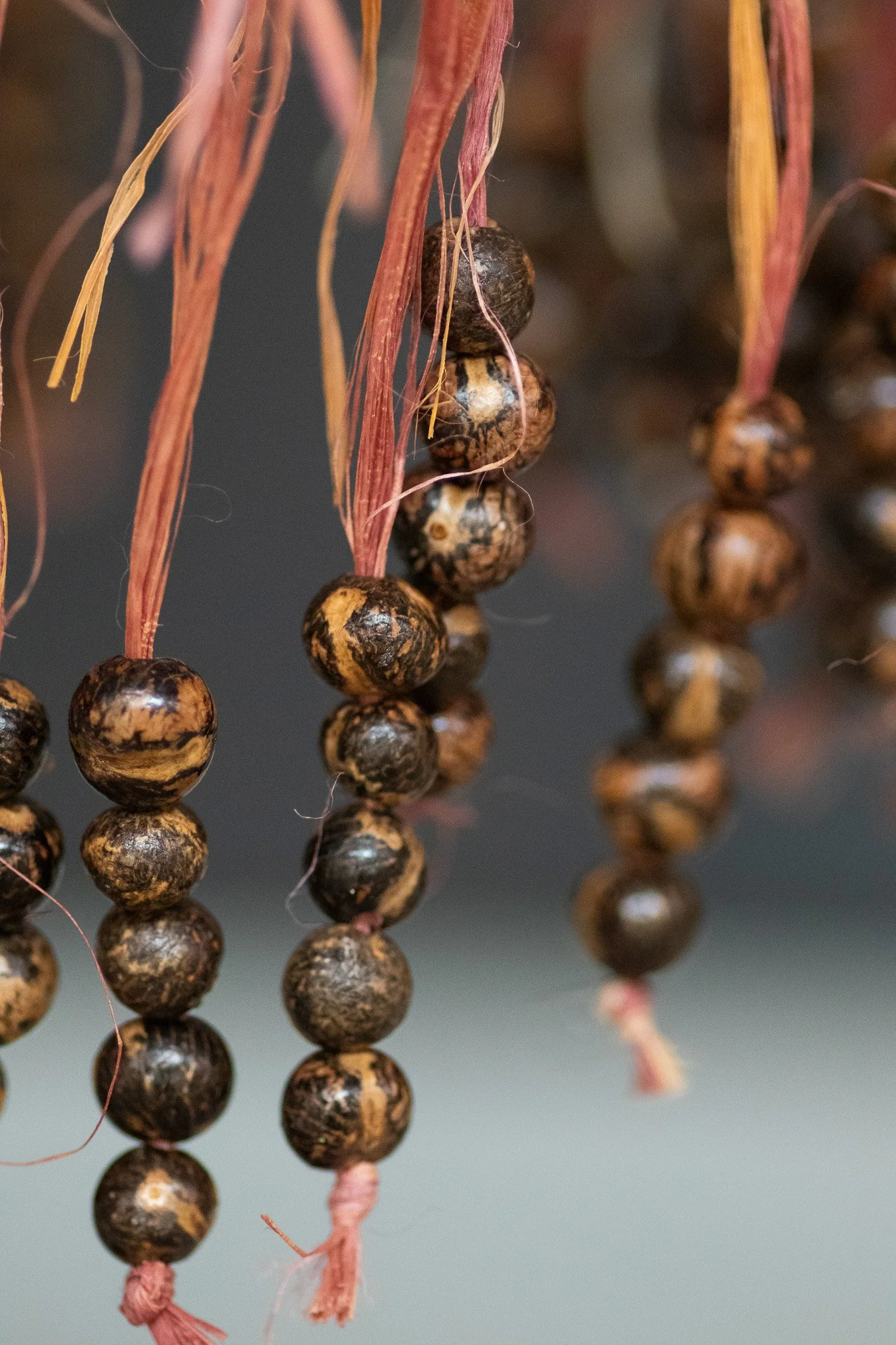
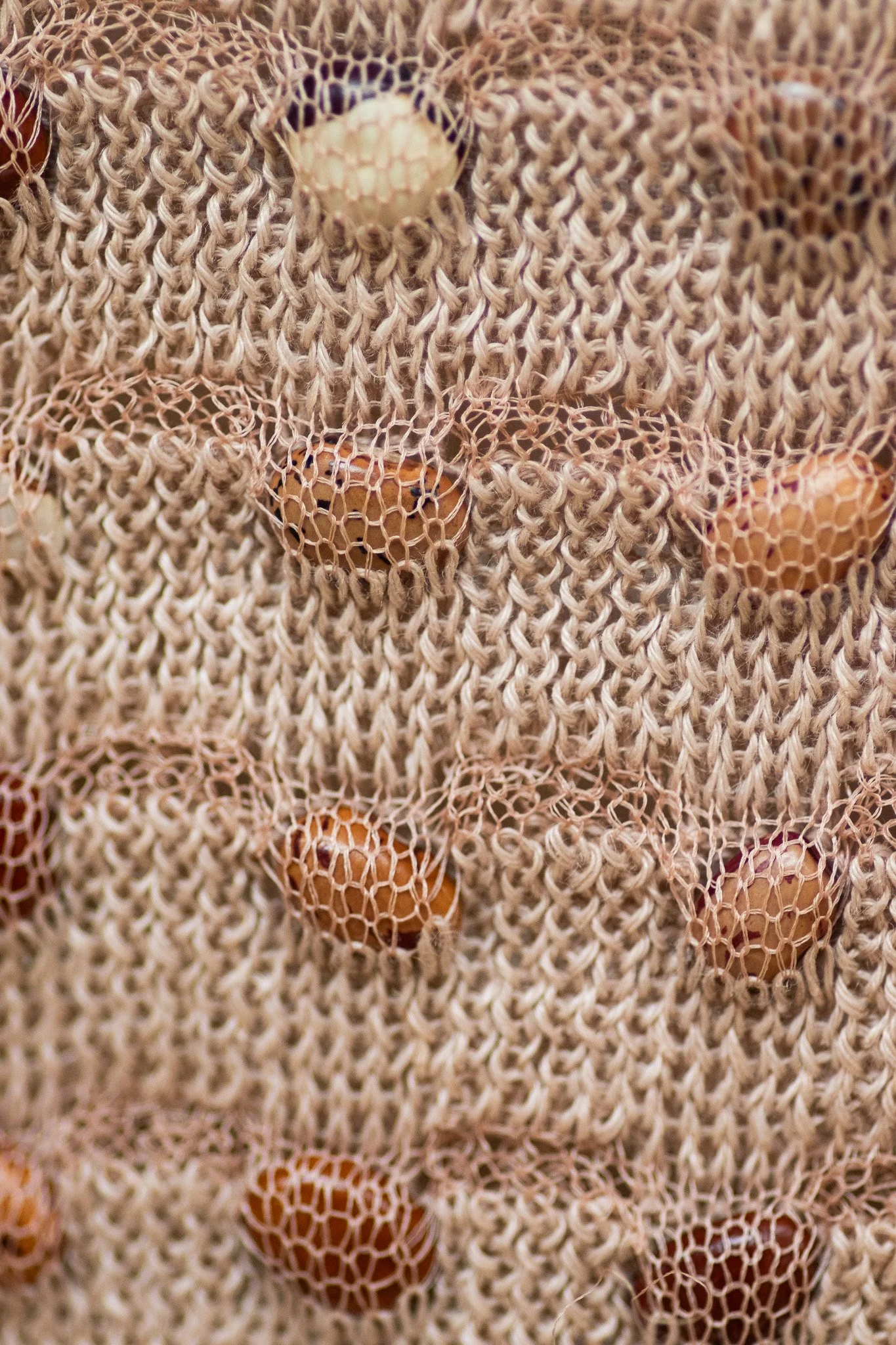
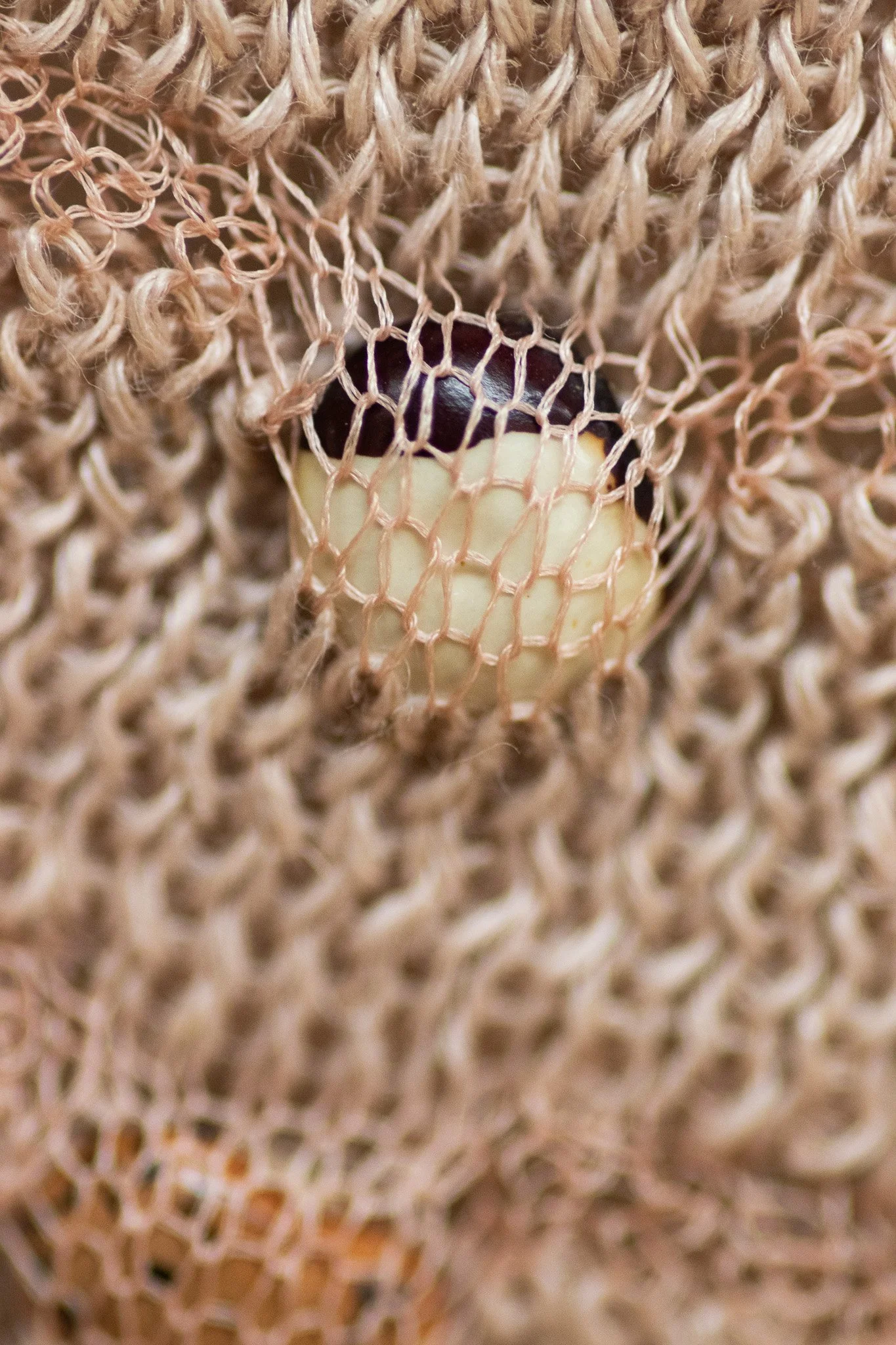
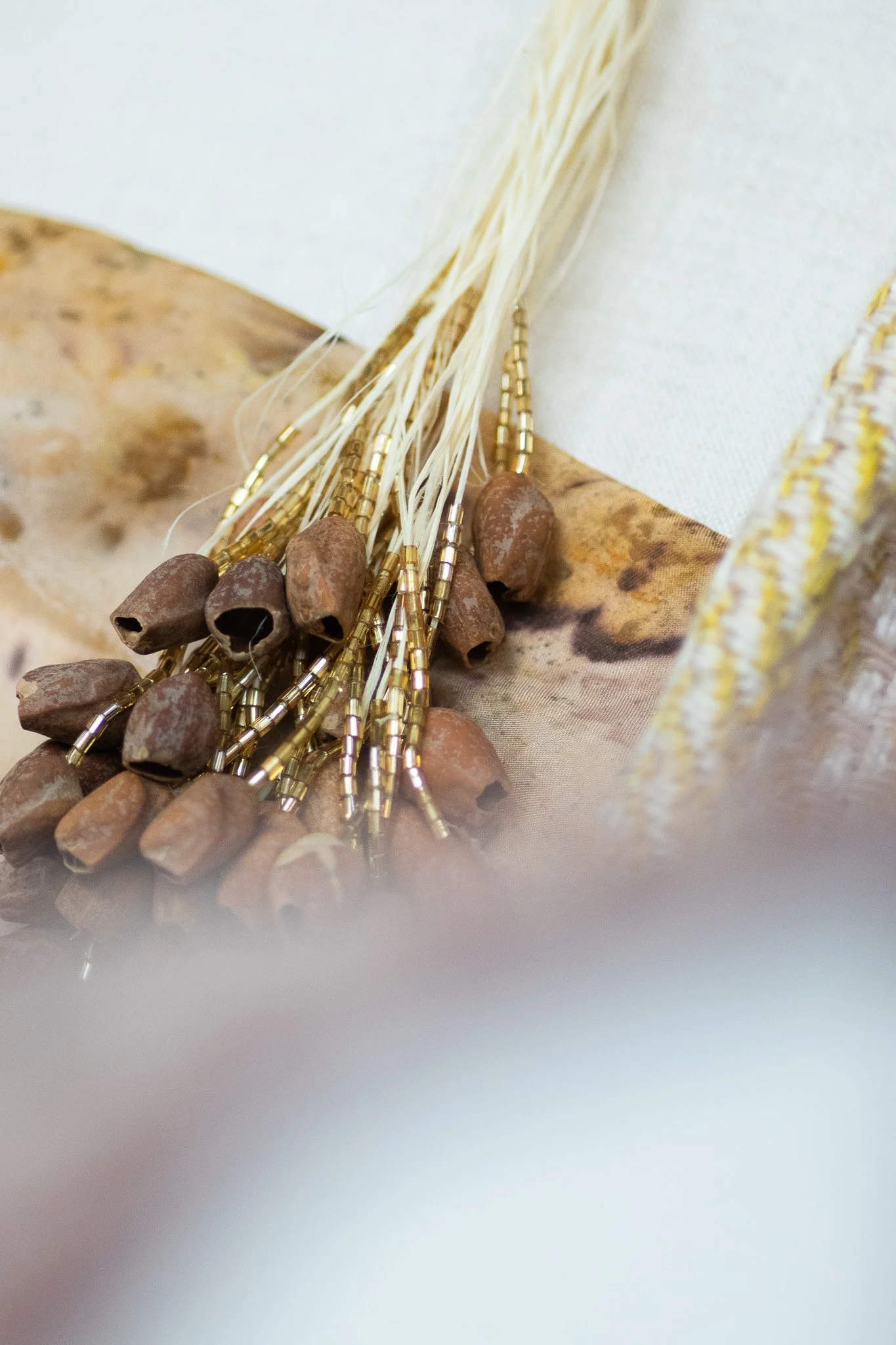
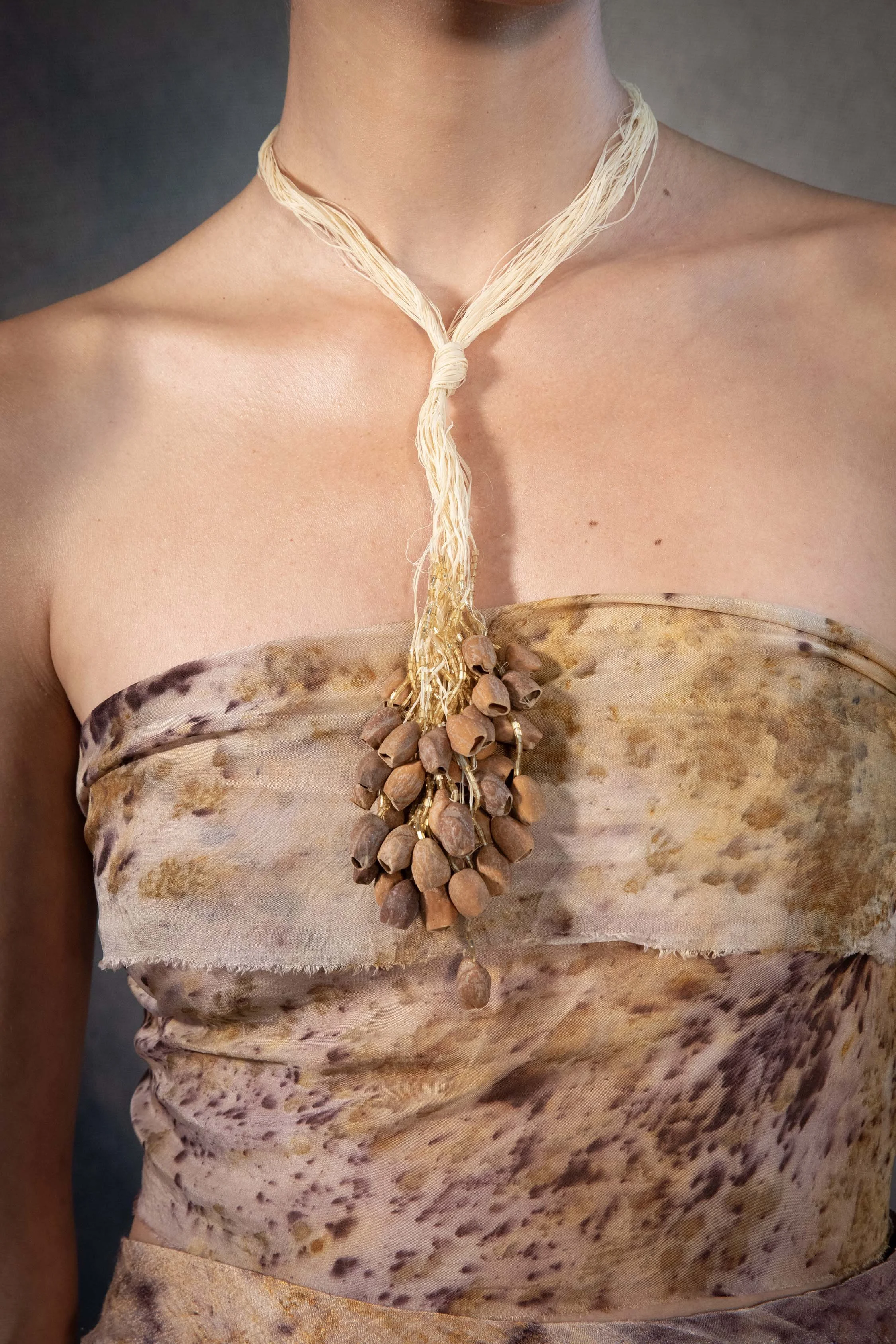
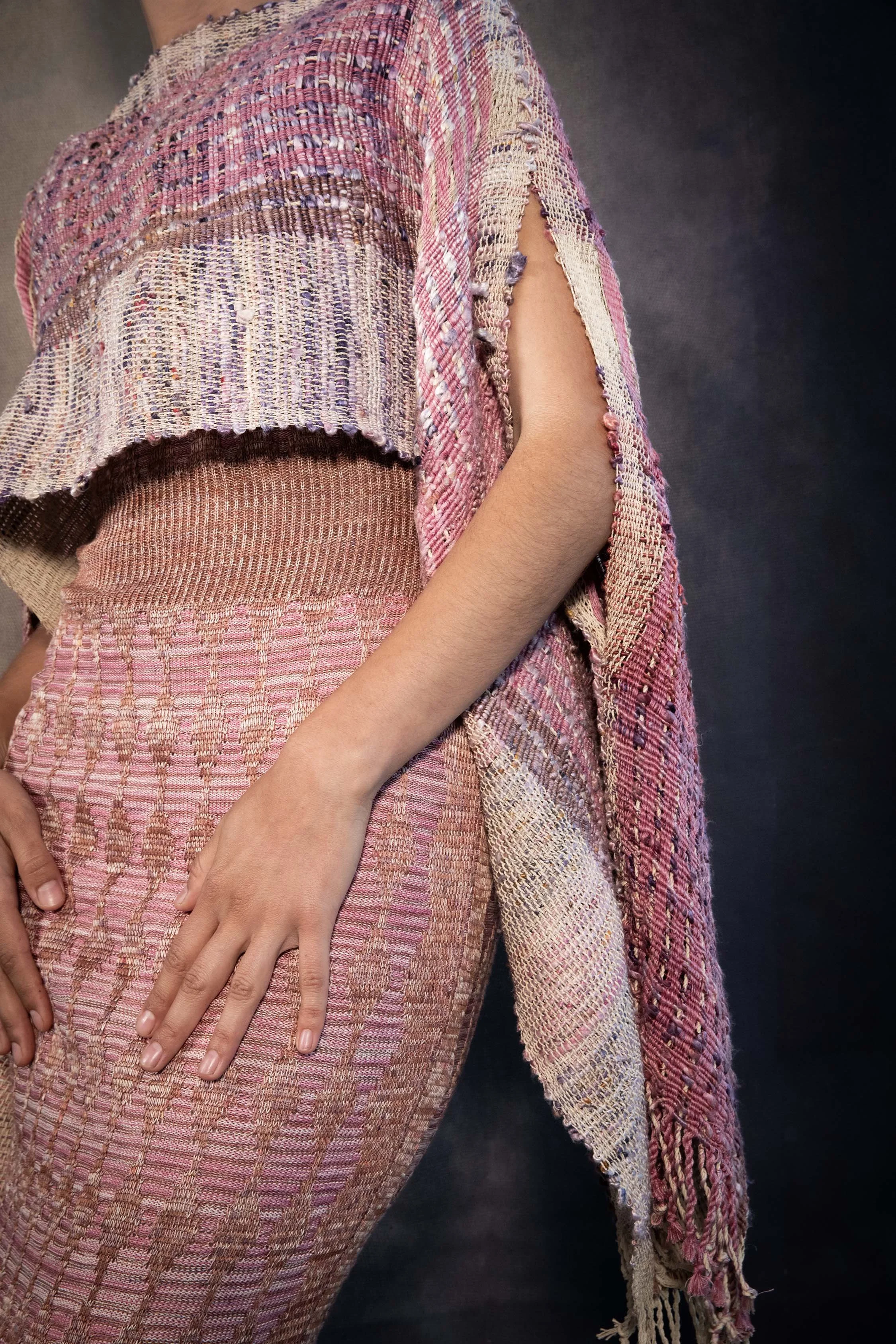
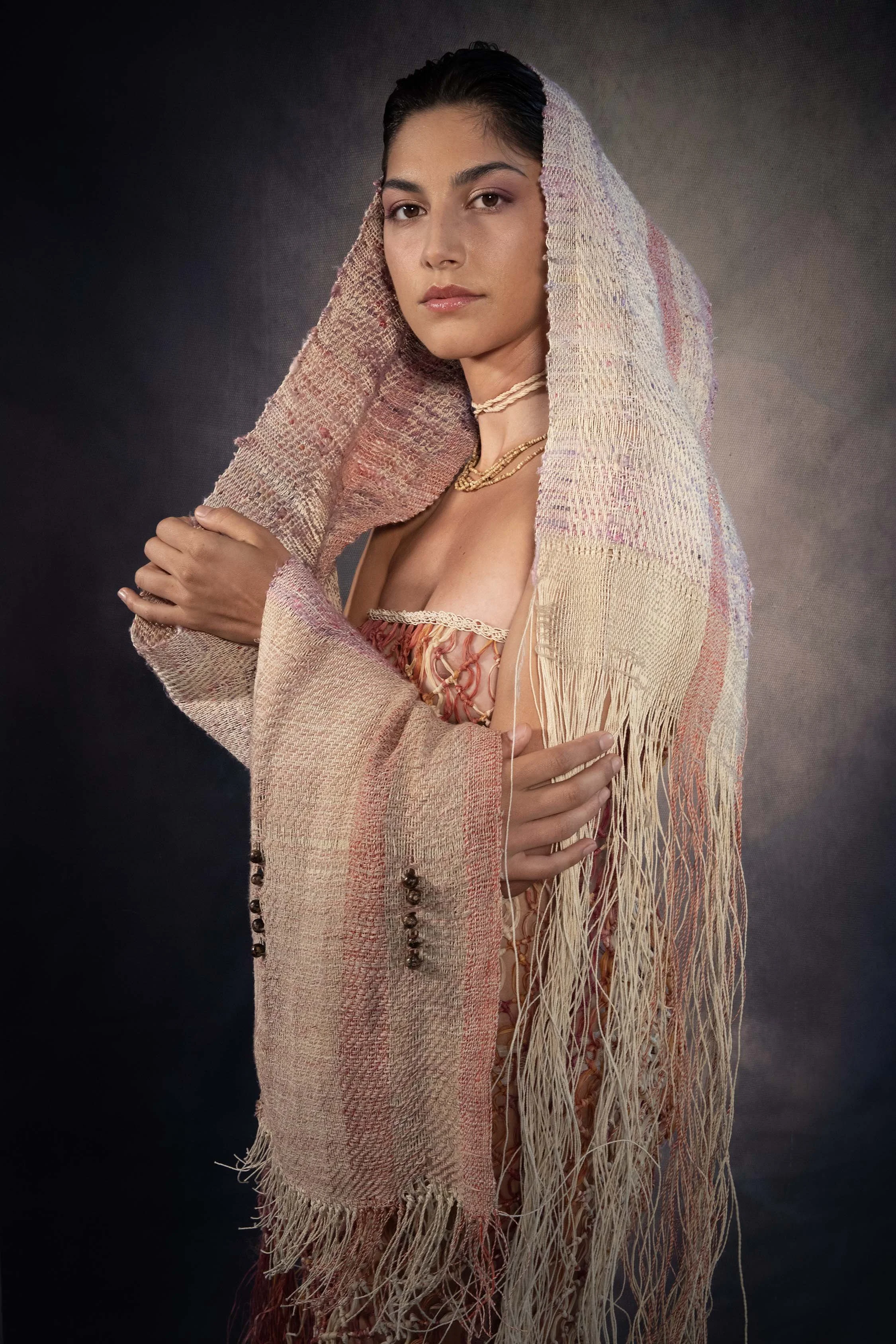
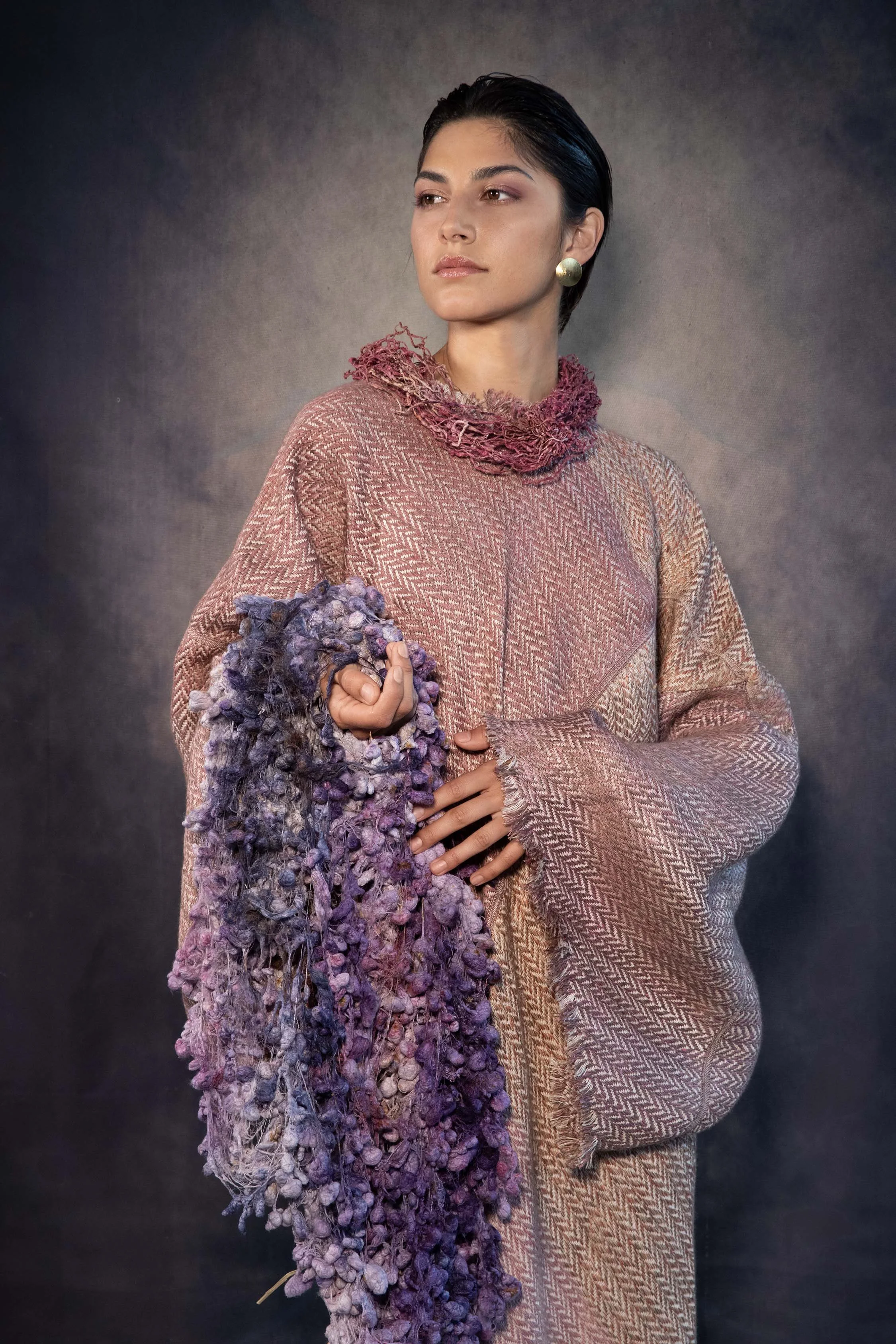
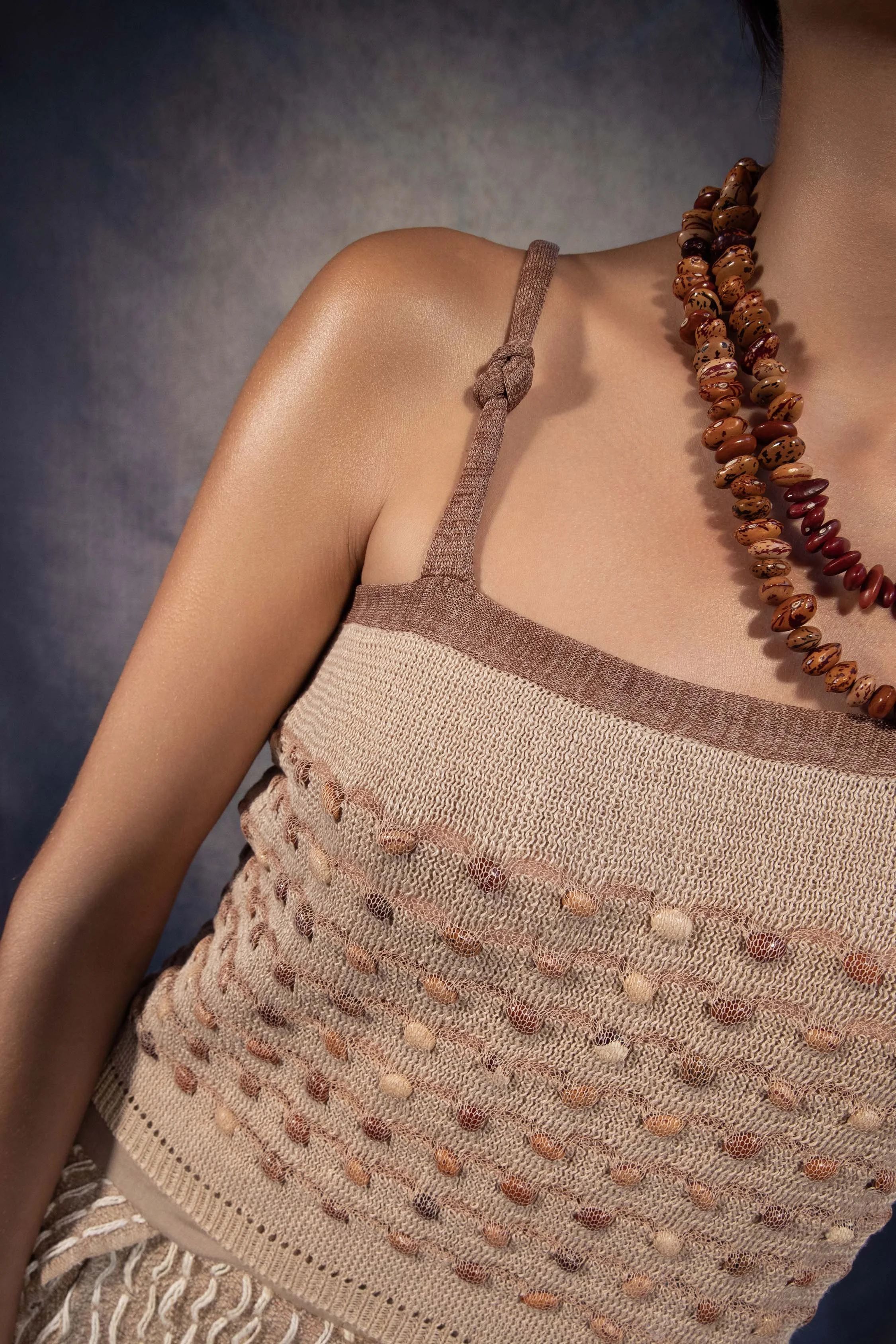
The result is a sculptural, alchemical series of textiles that embody transformation, like a serpent in ritual renewal. From gold-leafed yanchama bark cloth to seed-fringed macramé skirts and knitted Colombian beans, each piece is a radical testament to meticulous craftsmanship, a reverence to the earth.
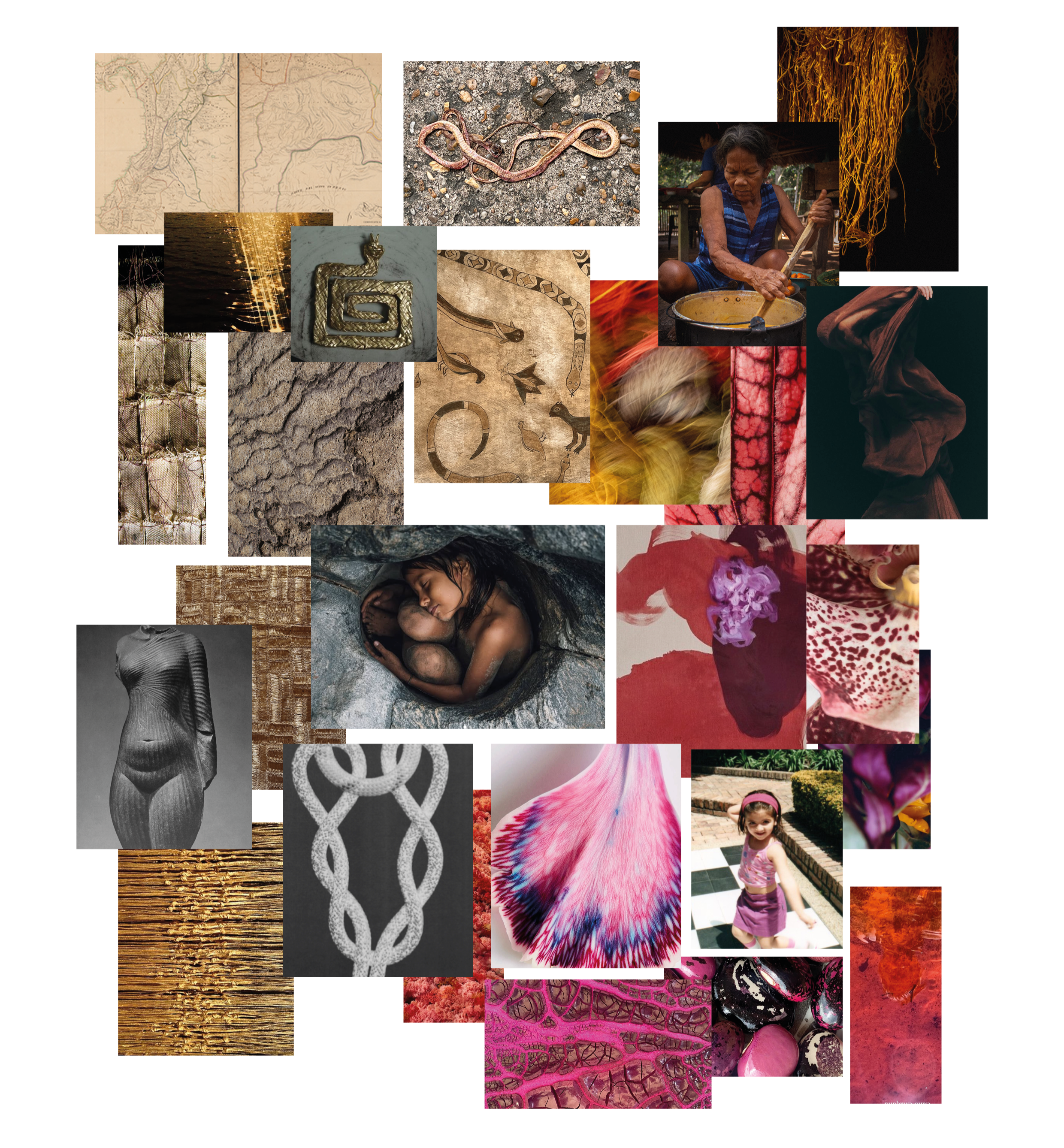
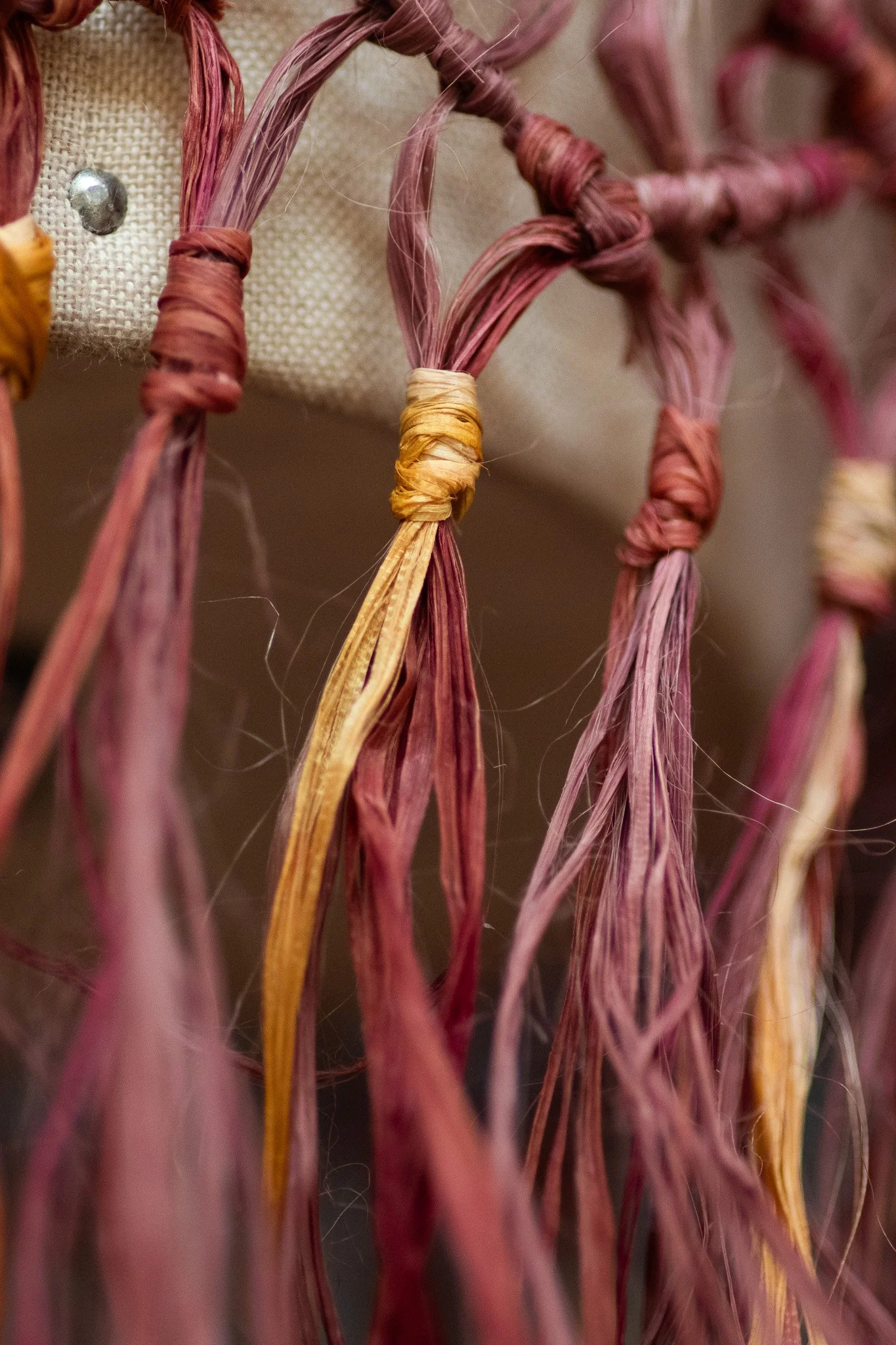
The pieces arise from a journey conducted by Veronica into the Colombian Amazon rainforest, where she met Kasia, a Witoto artisan, and encountered the chambira fibre— a sacred material and an amulet of protection also known by locals as “the daughter of the snake”—enabling a transformative experience that restores faith in life, community and beauty.
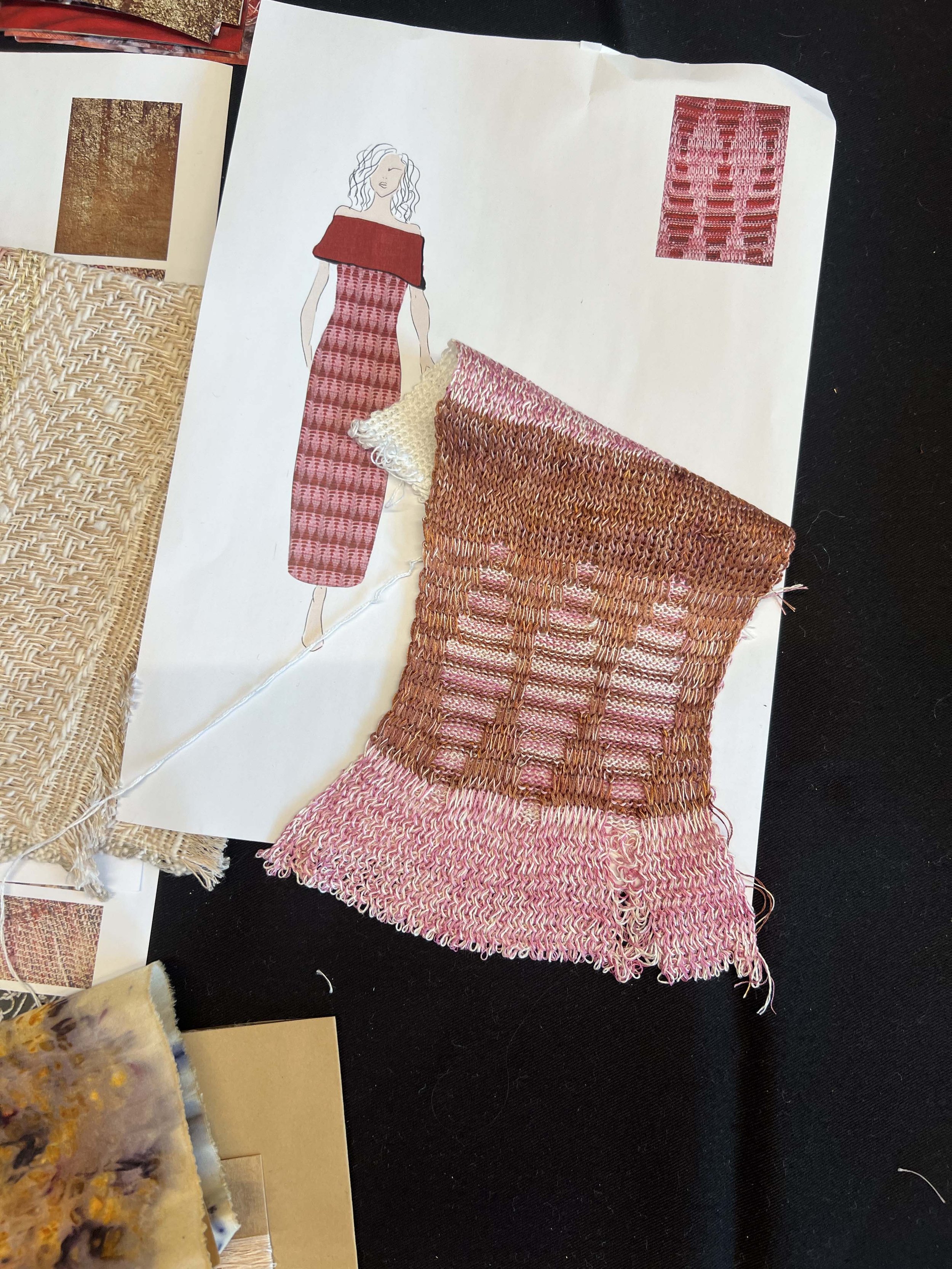
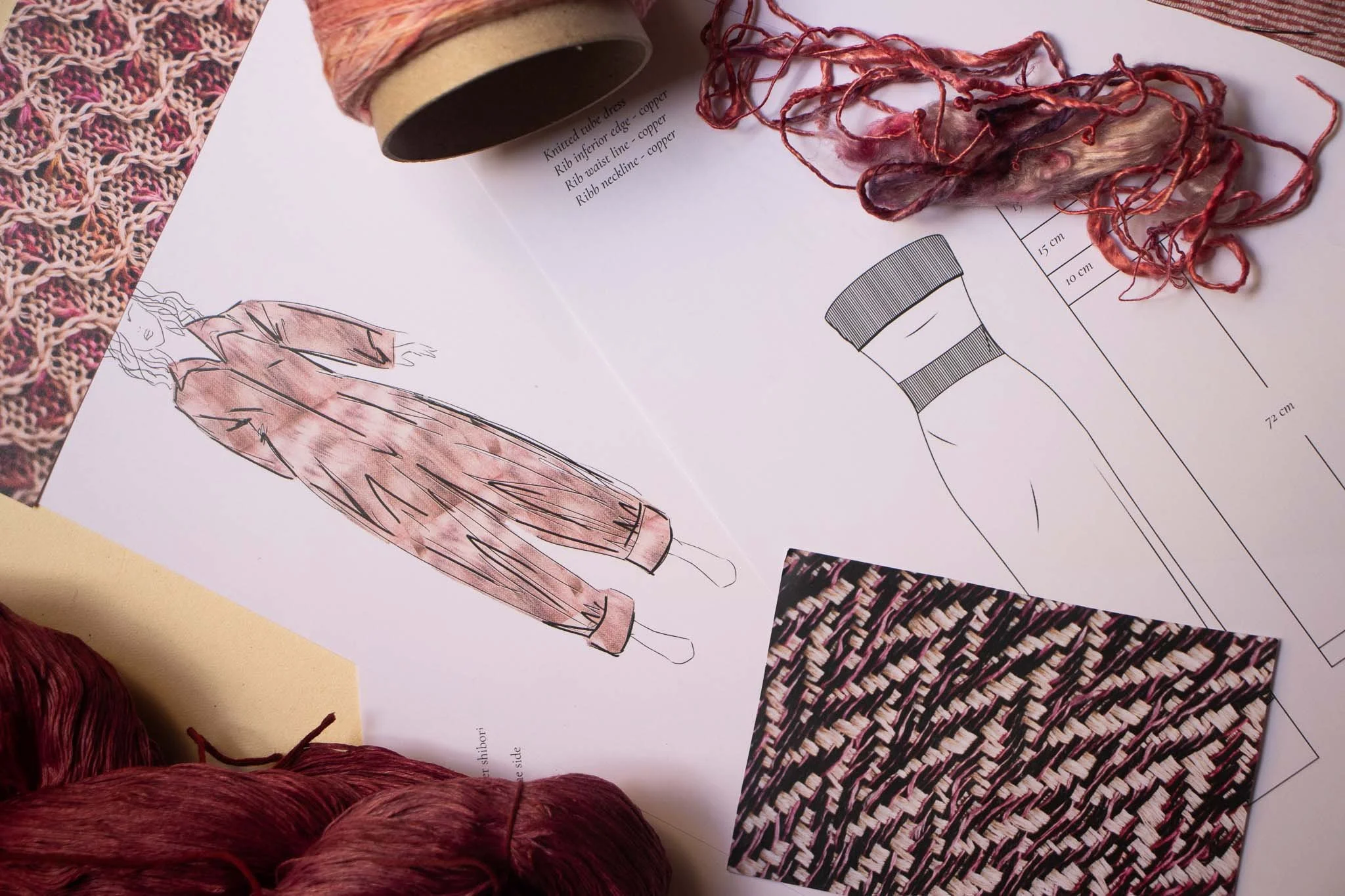
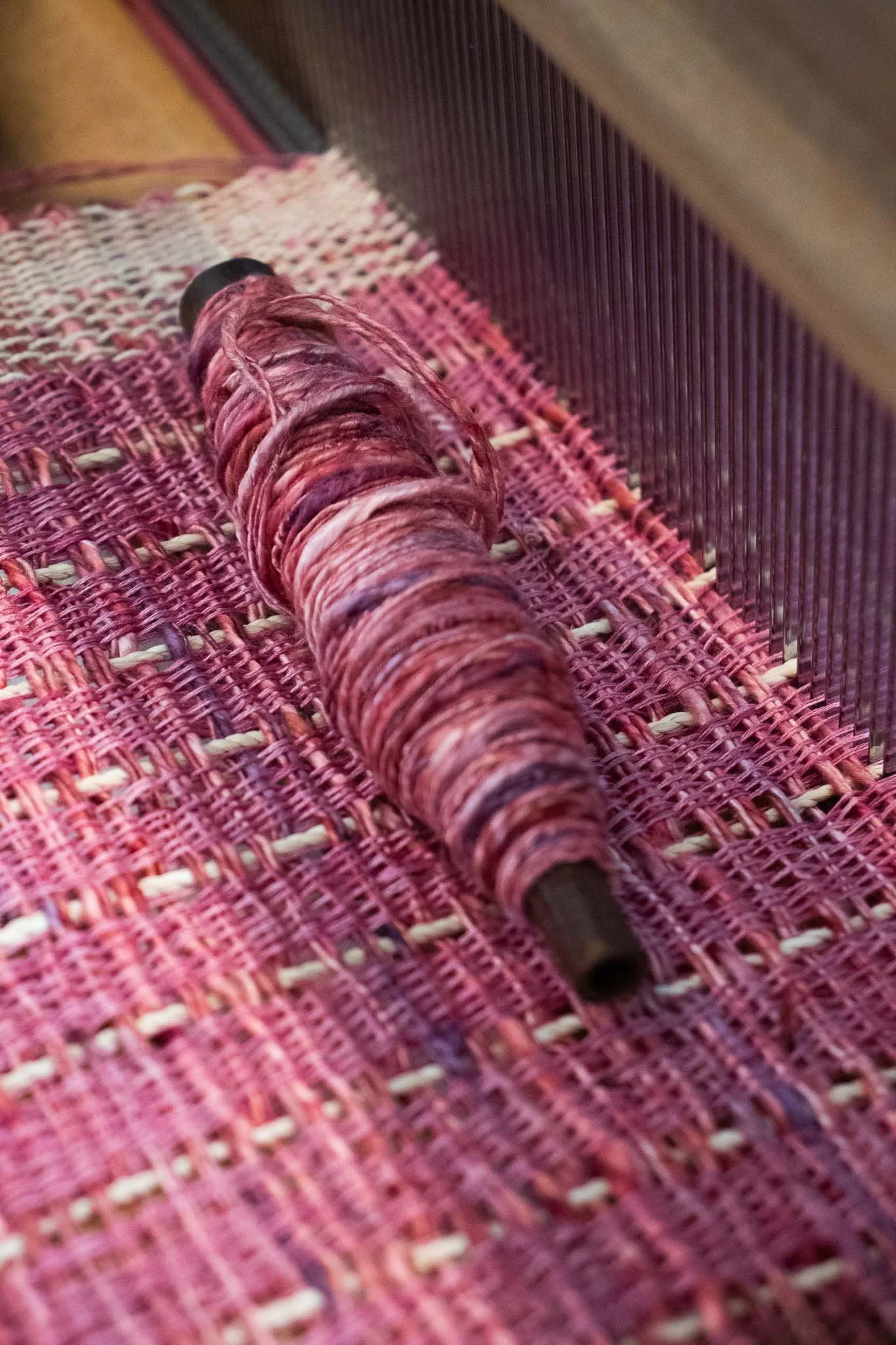
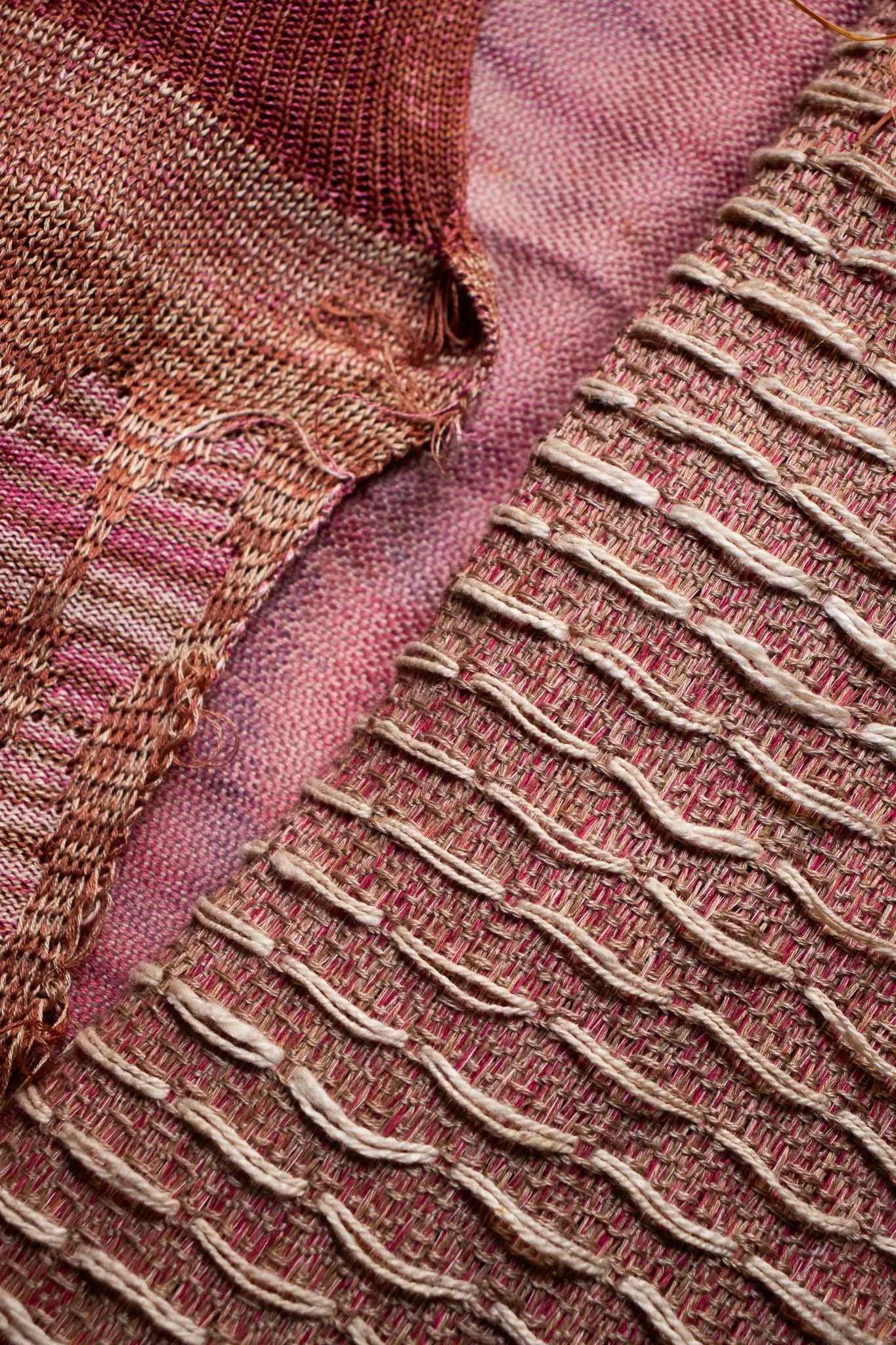
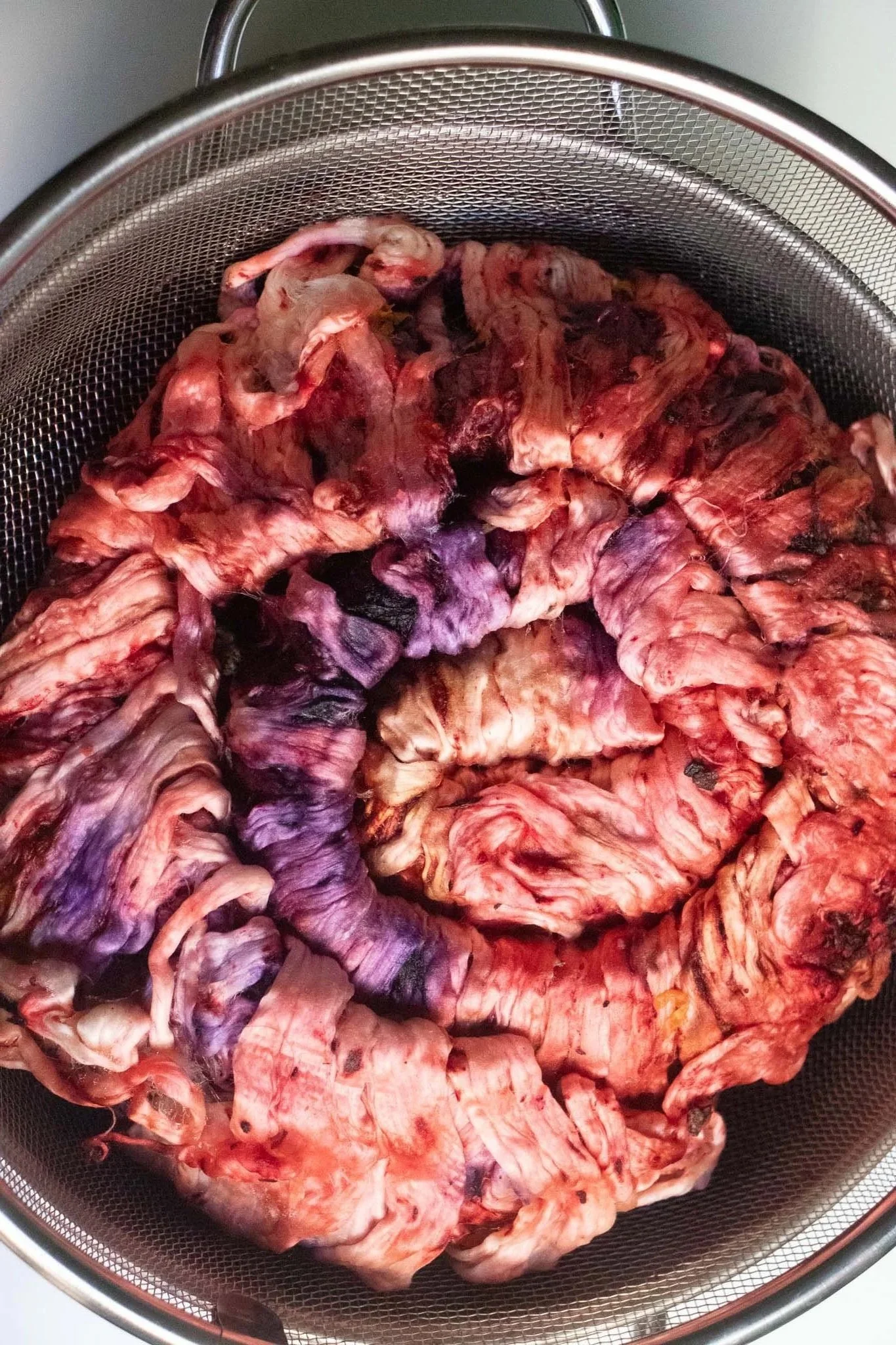
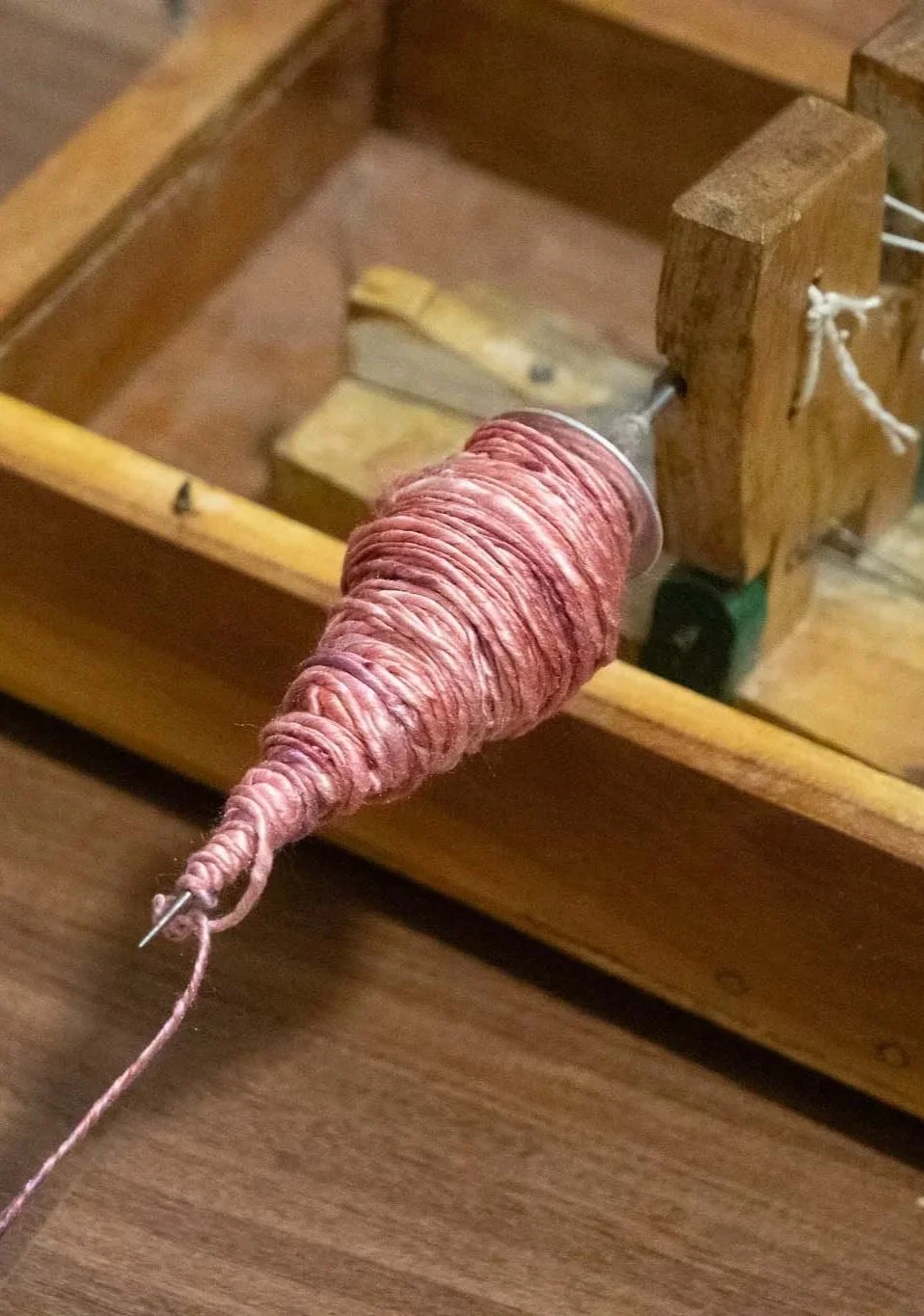
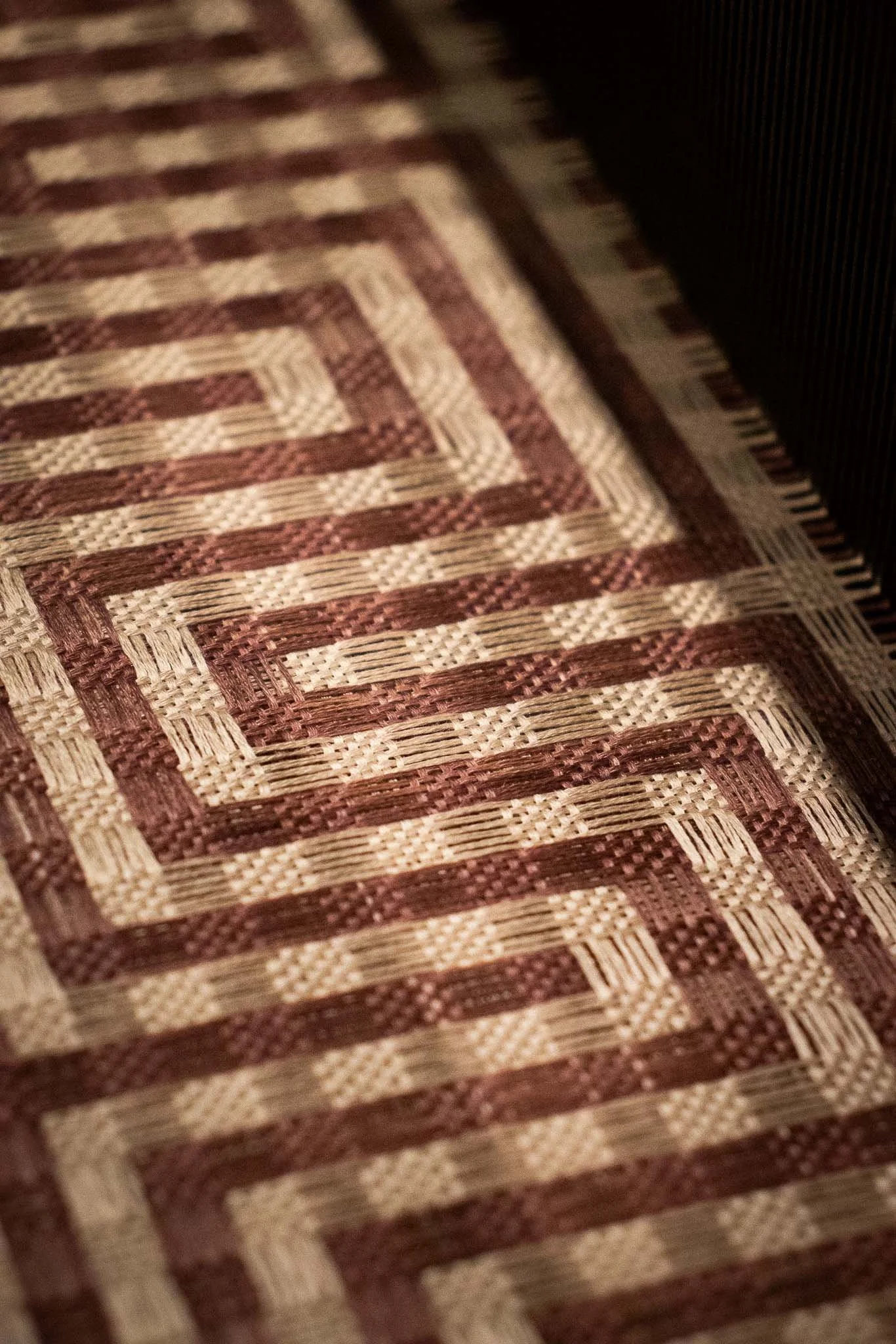
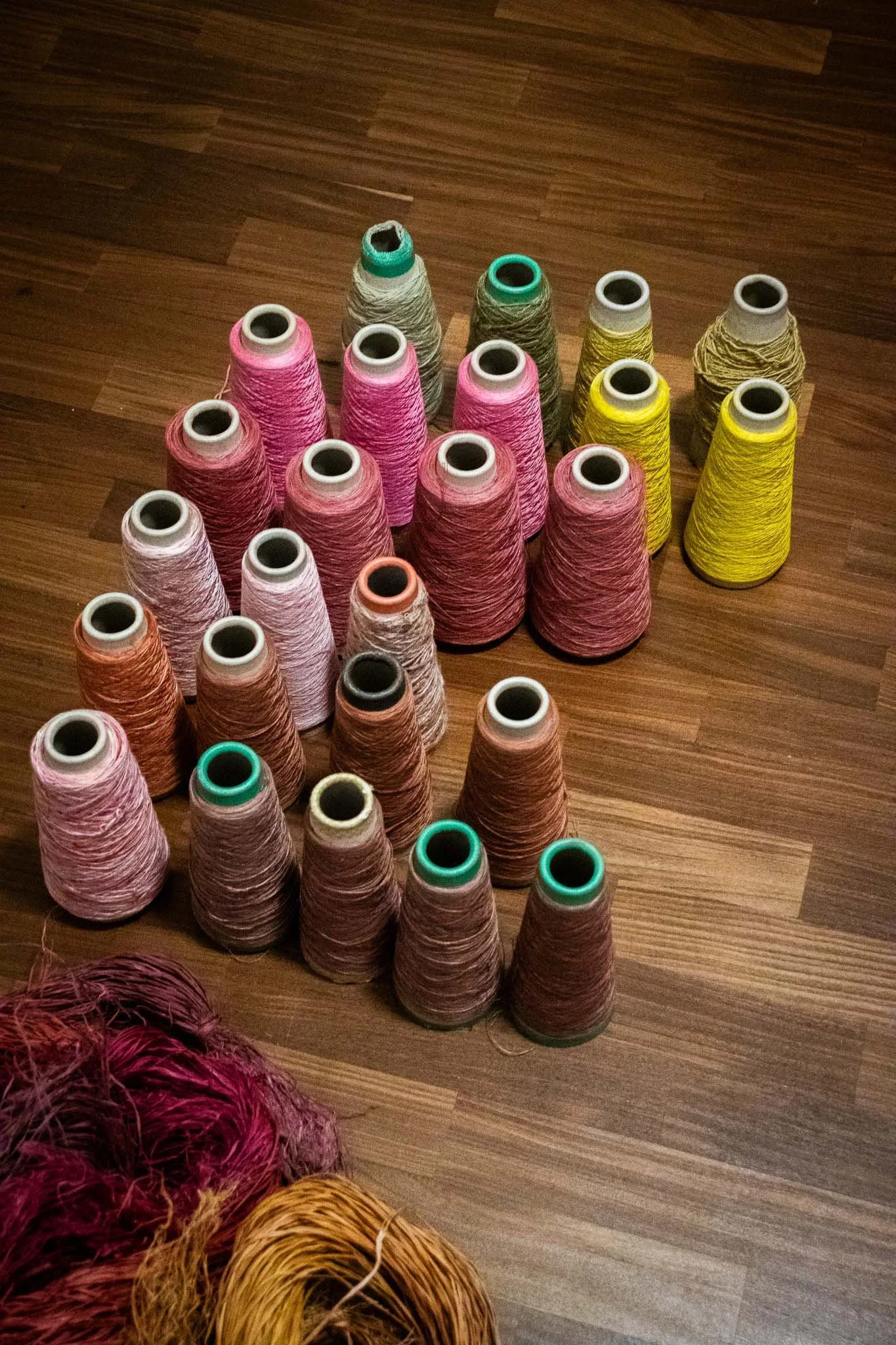
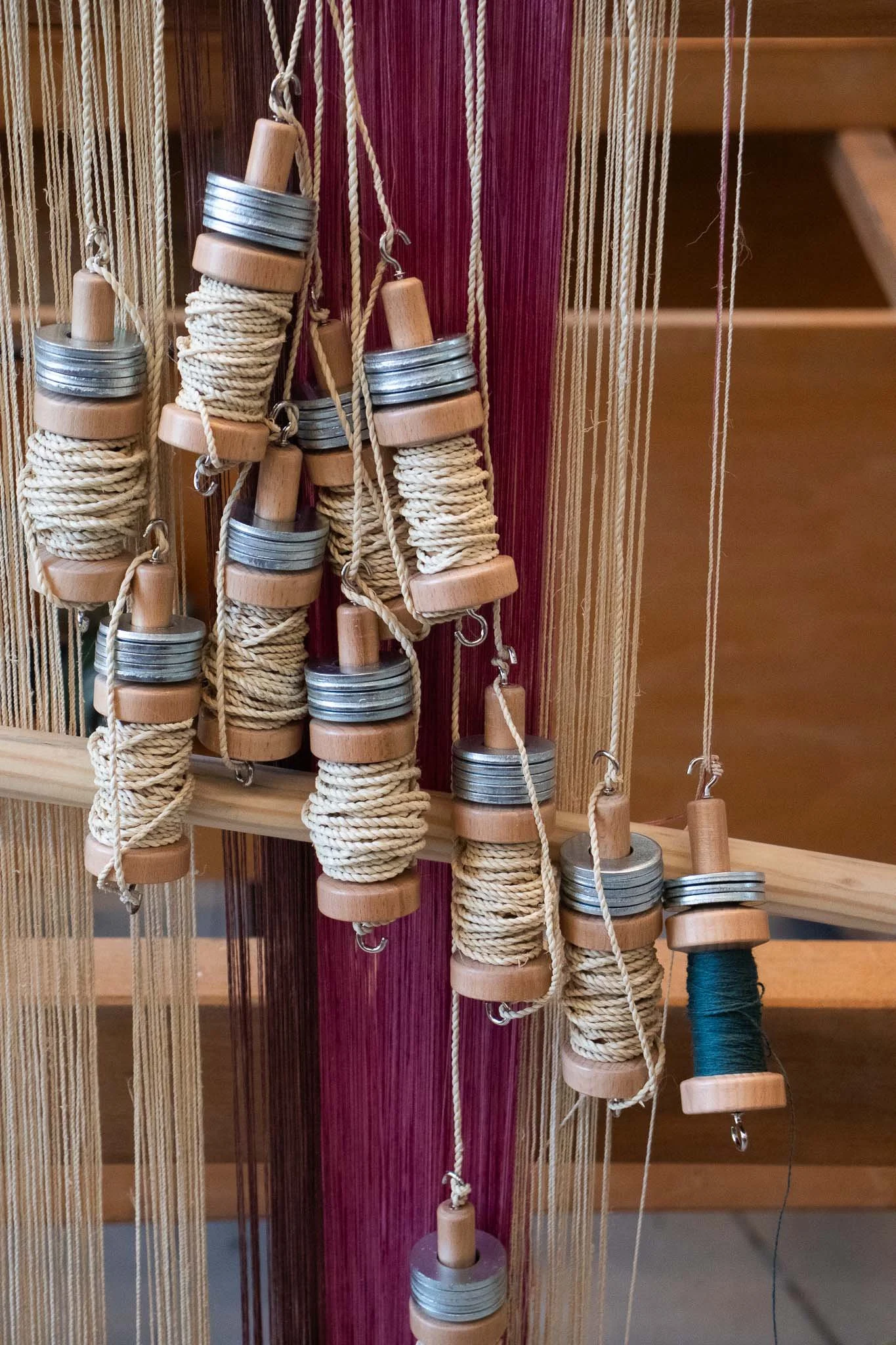
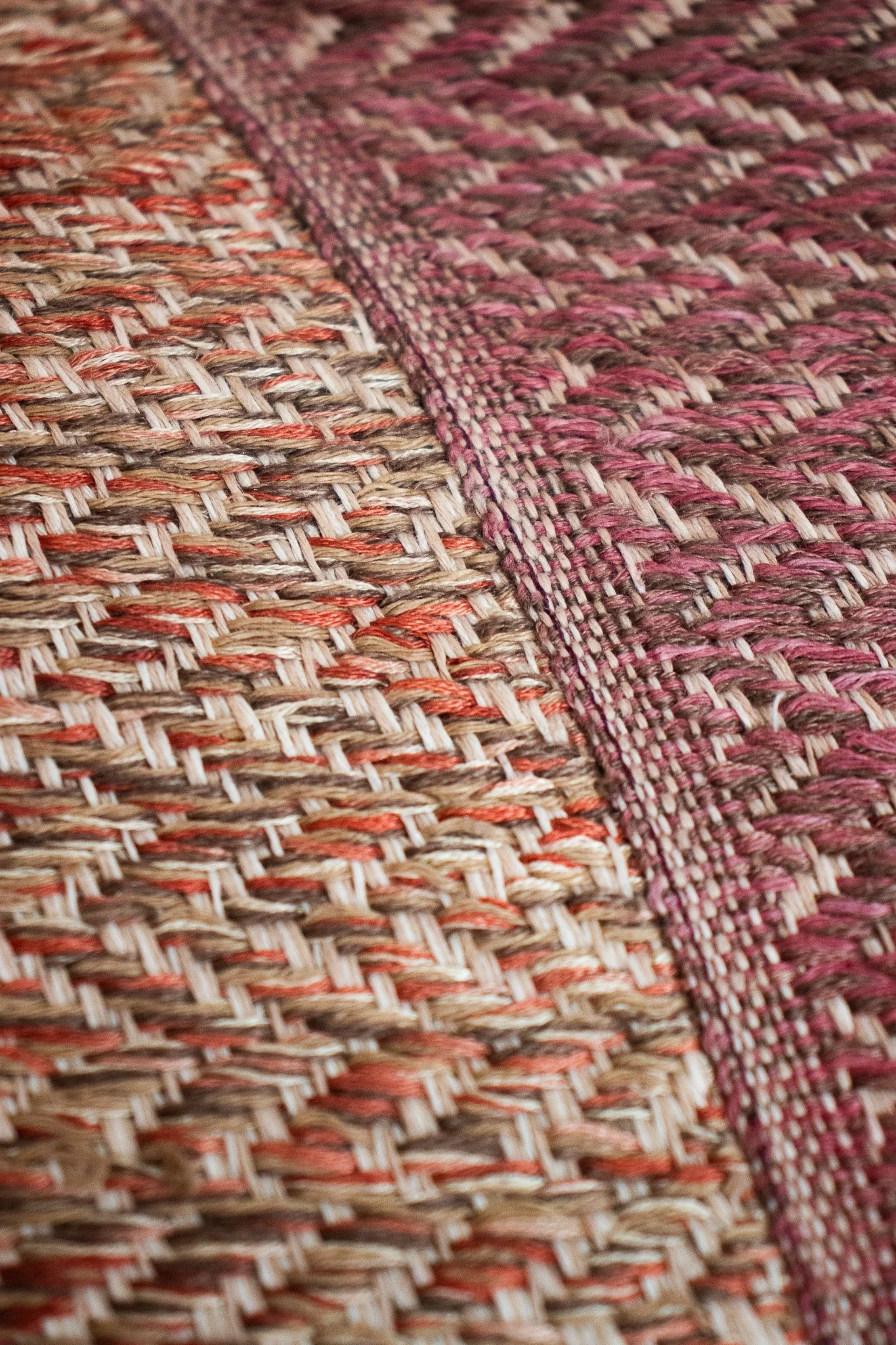
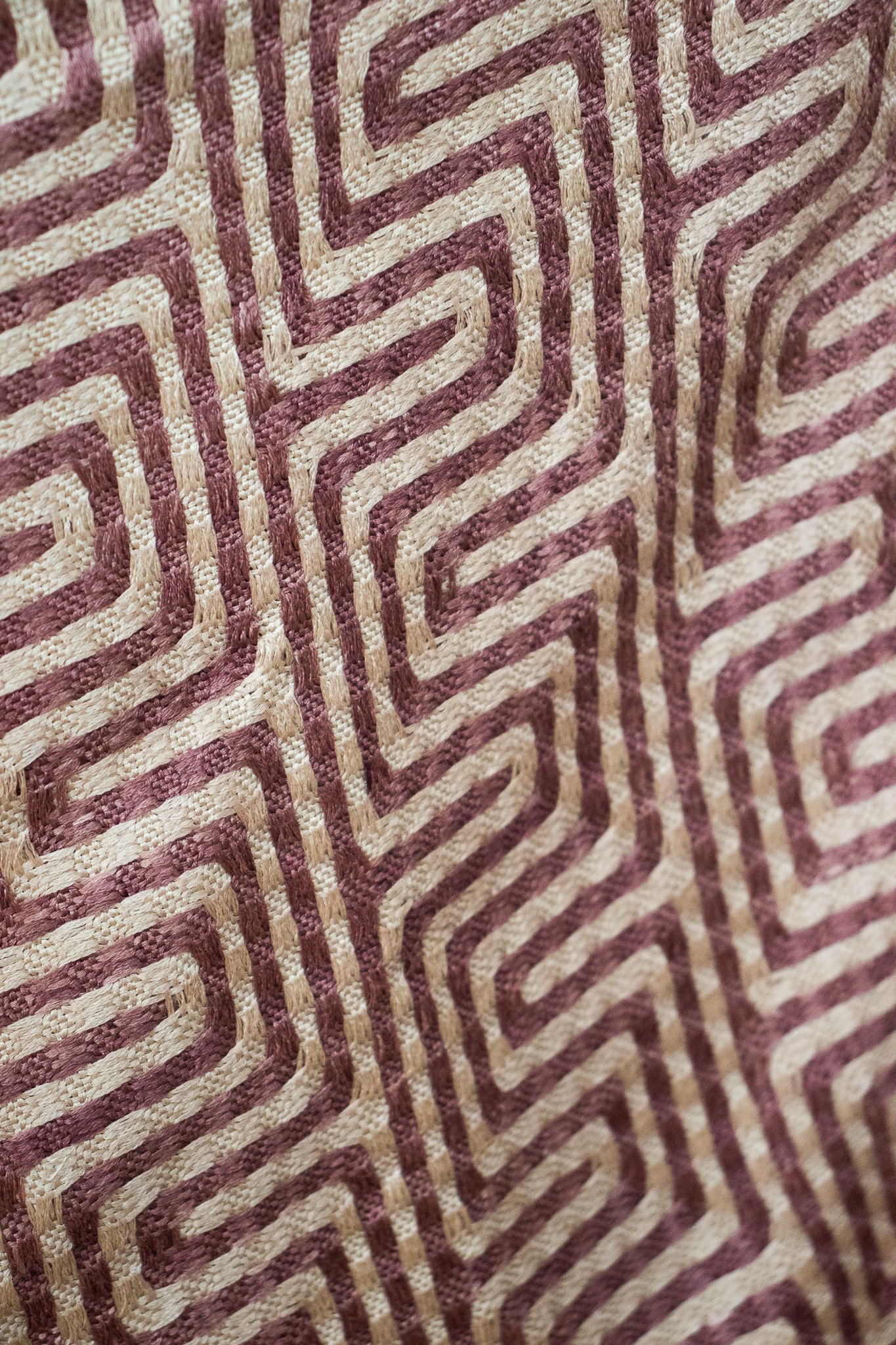
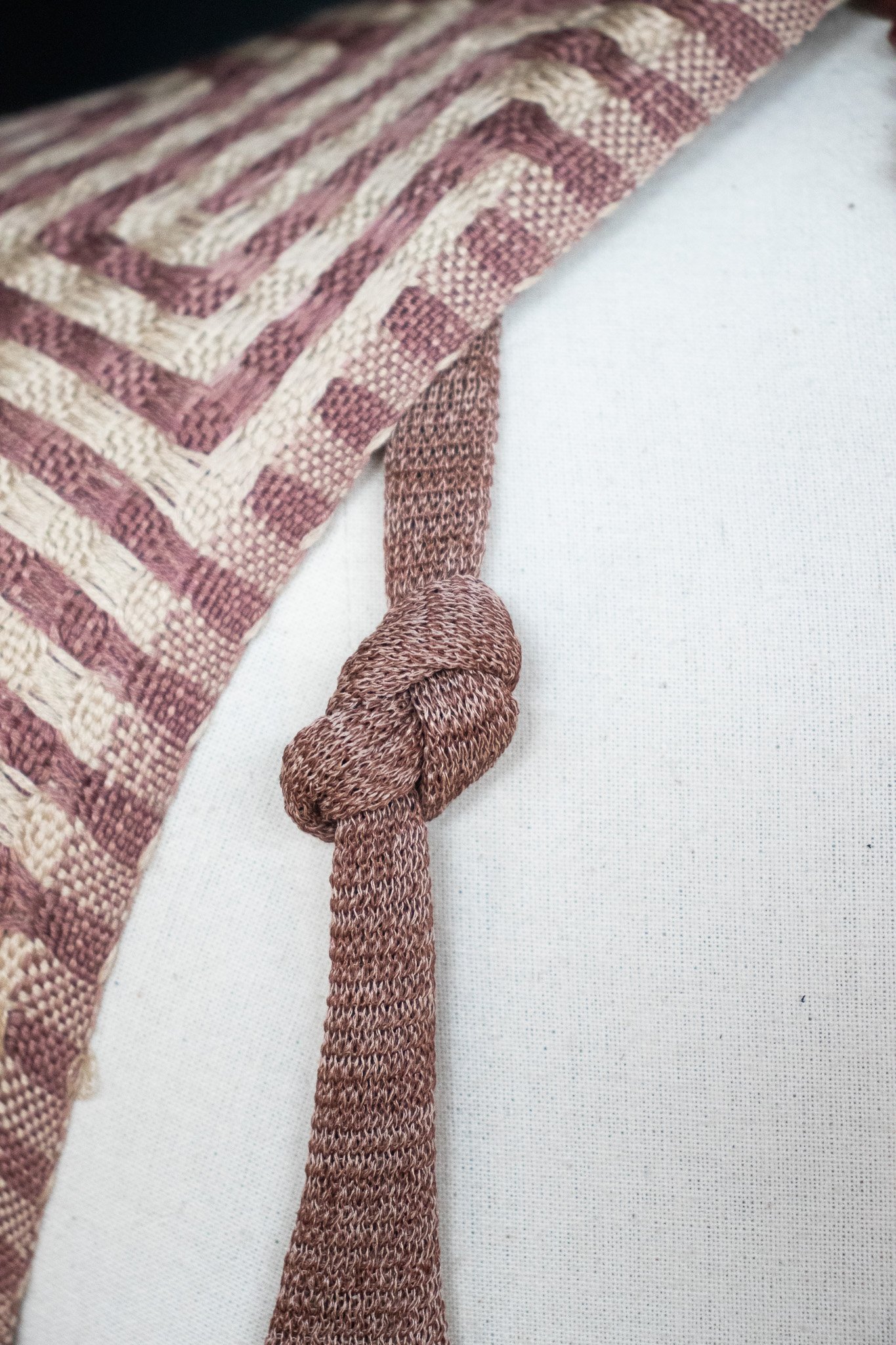
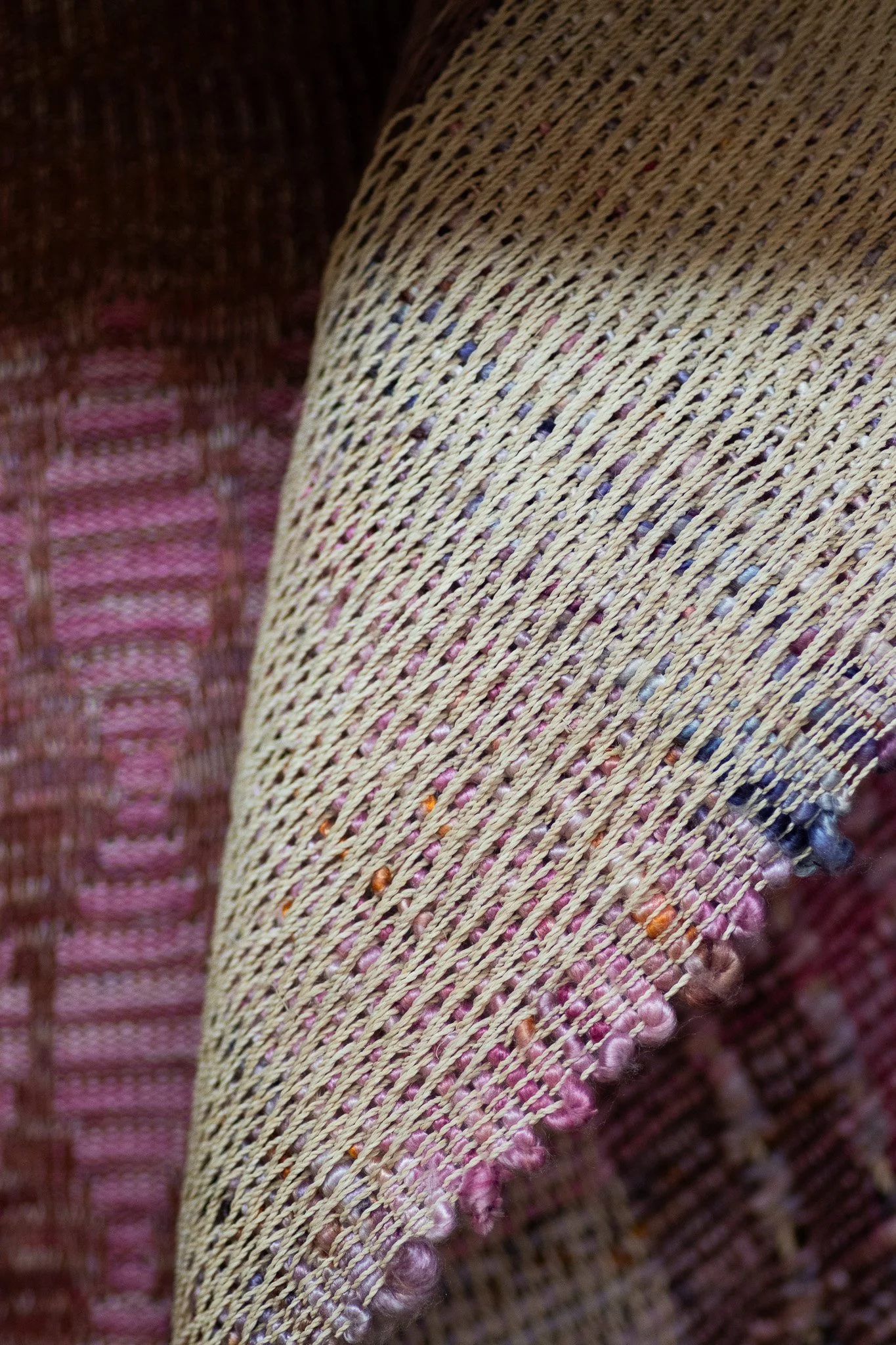
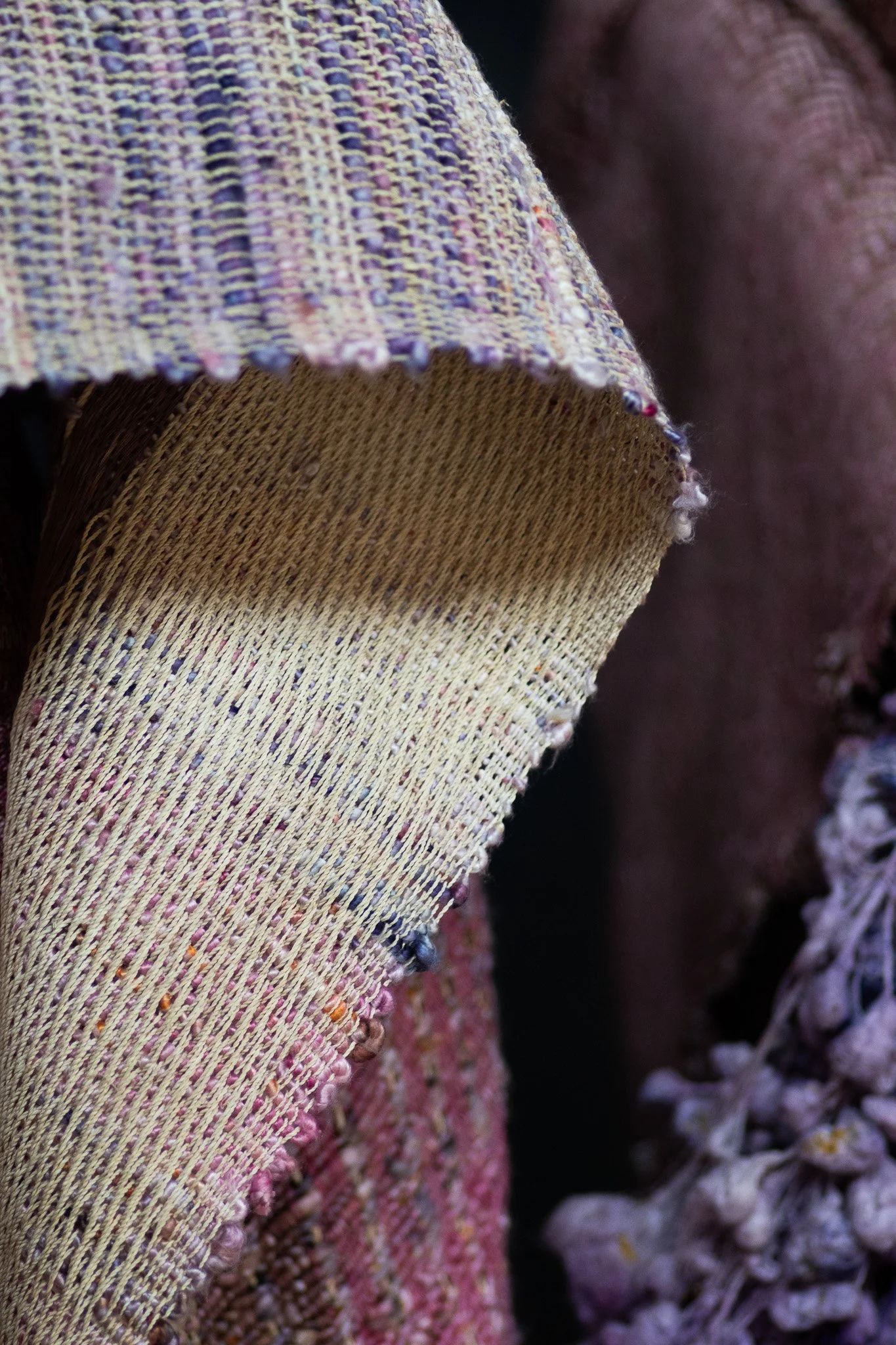
The collection incorporates double-bed machine knitting, macramé, hand embroidery, and complex manual weaving —including double cloths, mixed warps, and interlocking wefts— with no synthetic fibres or dyes. Over 72 cones of thread were naturally dyed using a botanical palette of cochineal, madder root, annatto, and logwood. More than 15 metres of fabric were woven on a manual dobby loom, combining Colombian silk and cotton, hand-twisted chambira fibre, yanchama bark cloth, and linen. Silk yarns were hand-spun by the artist using a traditional peti charkha from India.
With geometric pattern-cutting designed to minimize waste, the remaining 5% was transformed into accessories, shoes and bags. Some garments were shaped directly on the knitting machine using fully fashioned techniques.
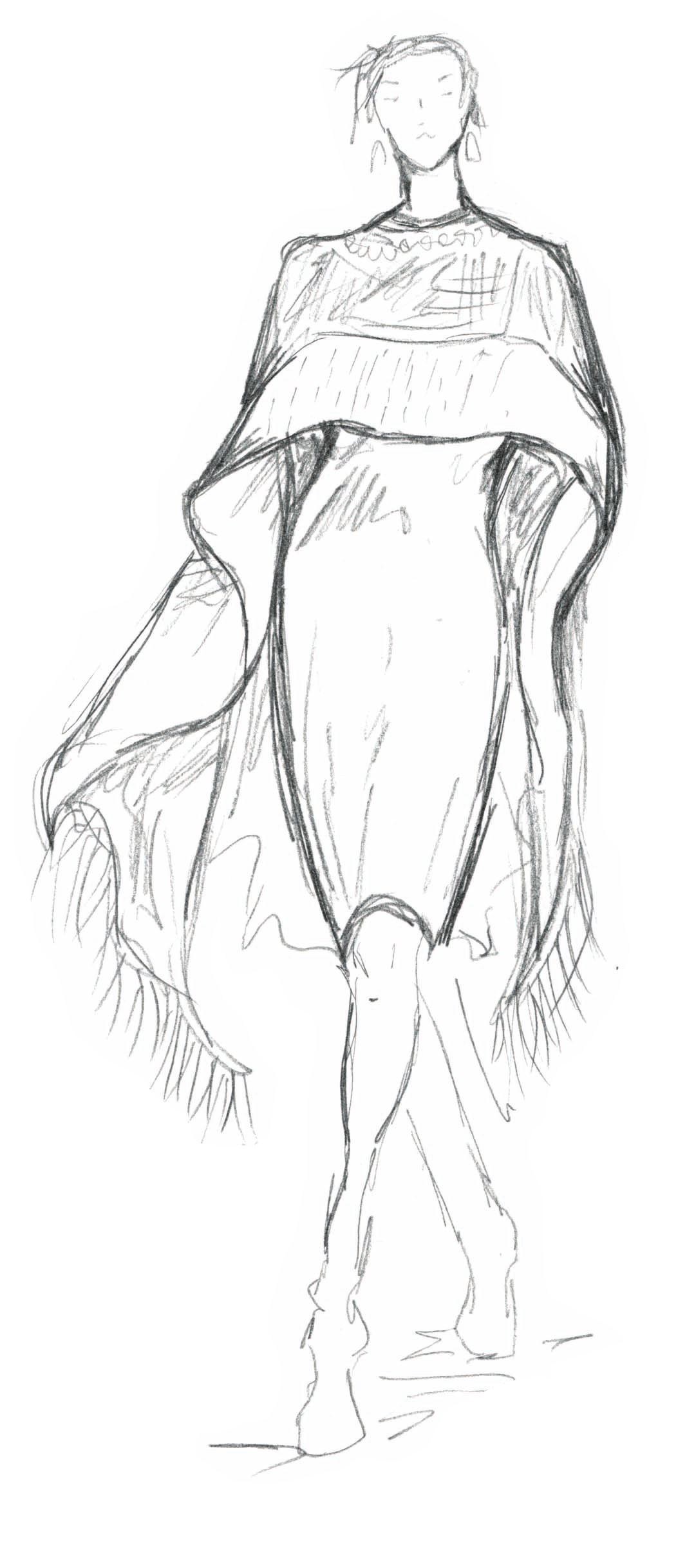
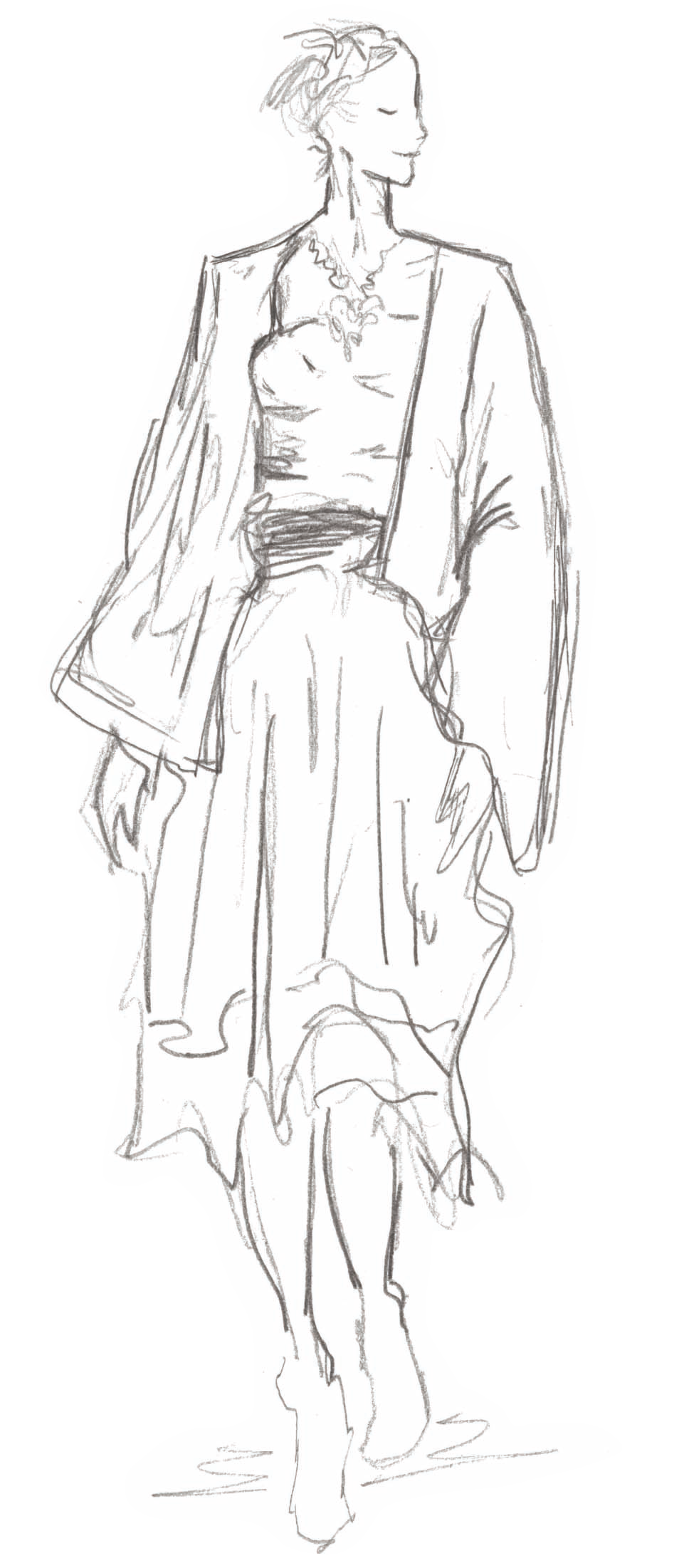
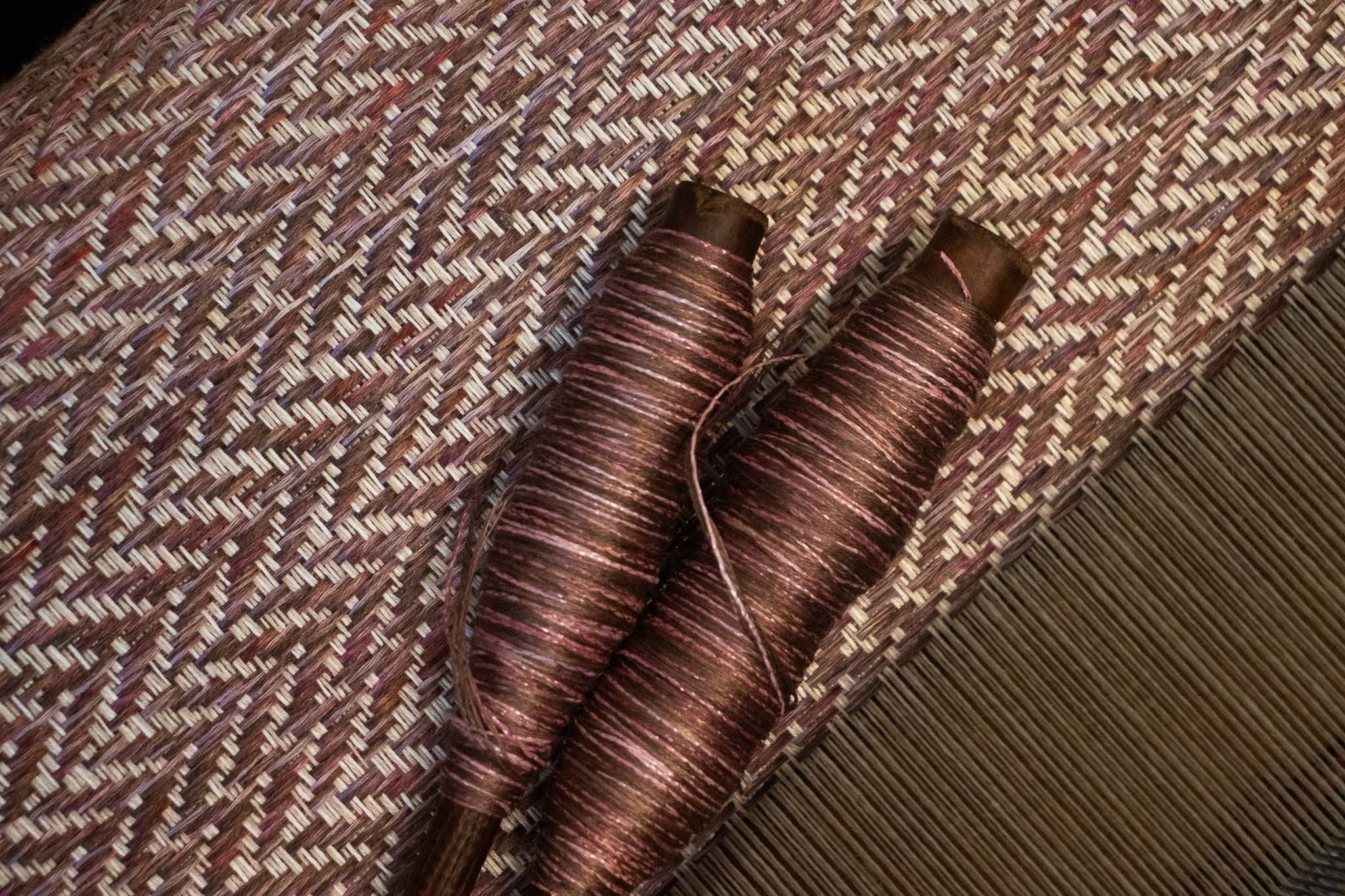
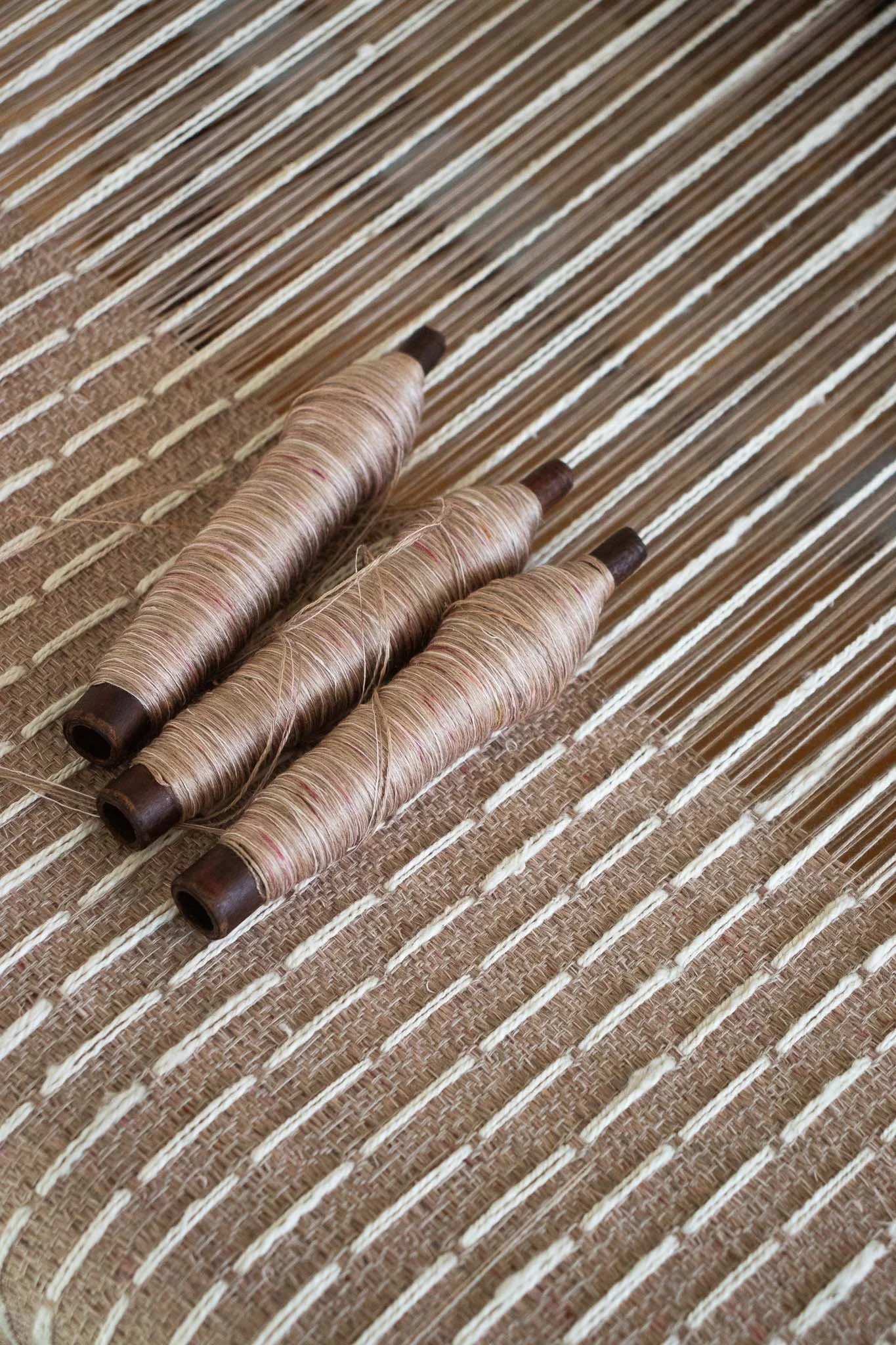
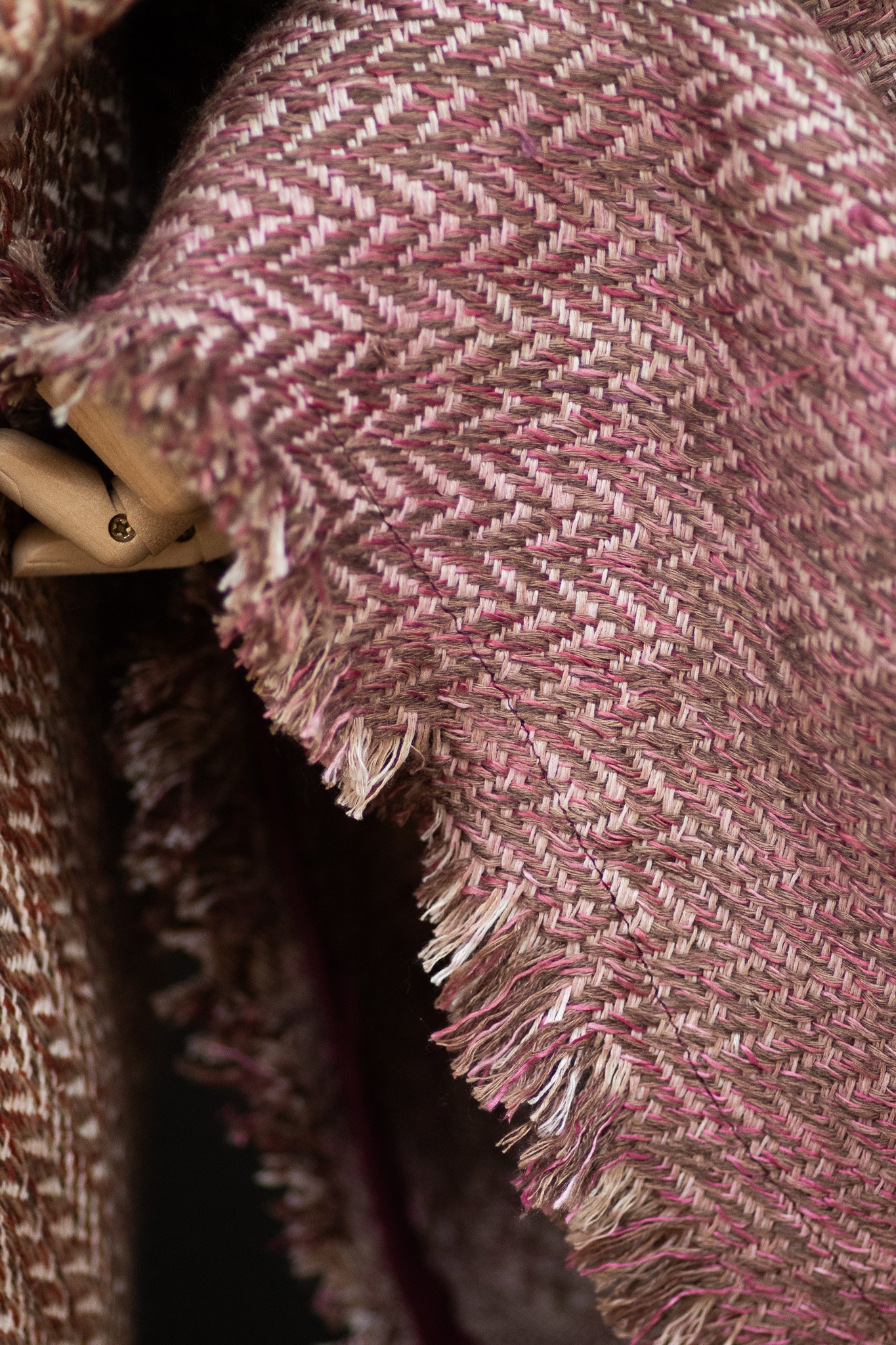
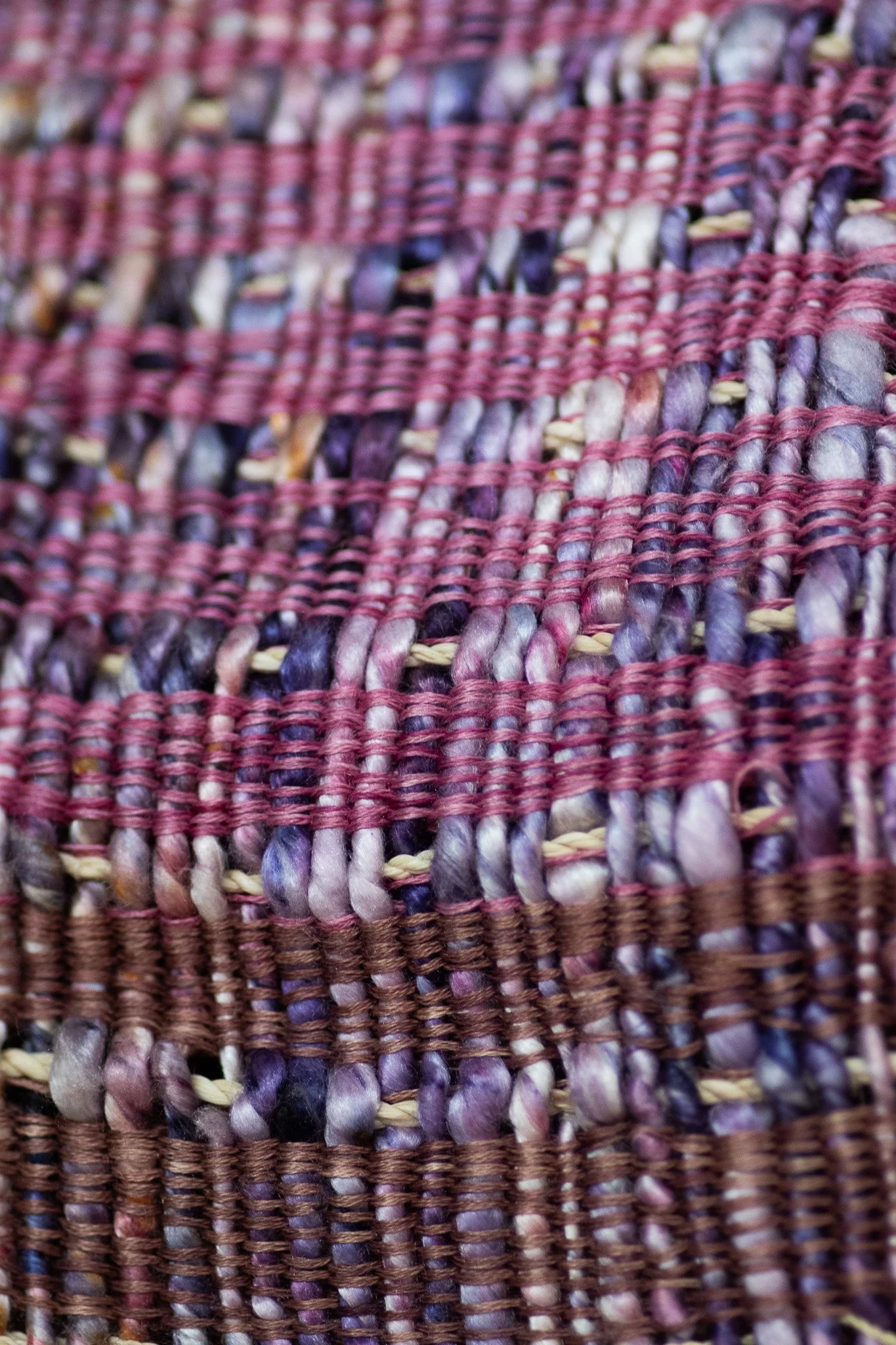
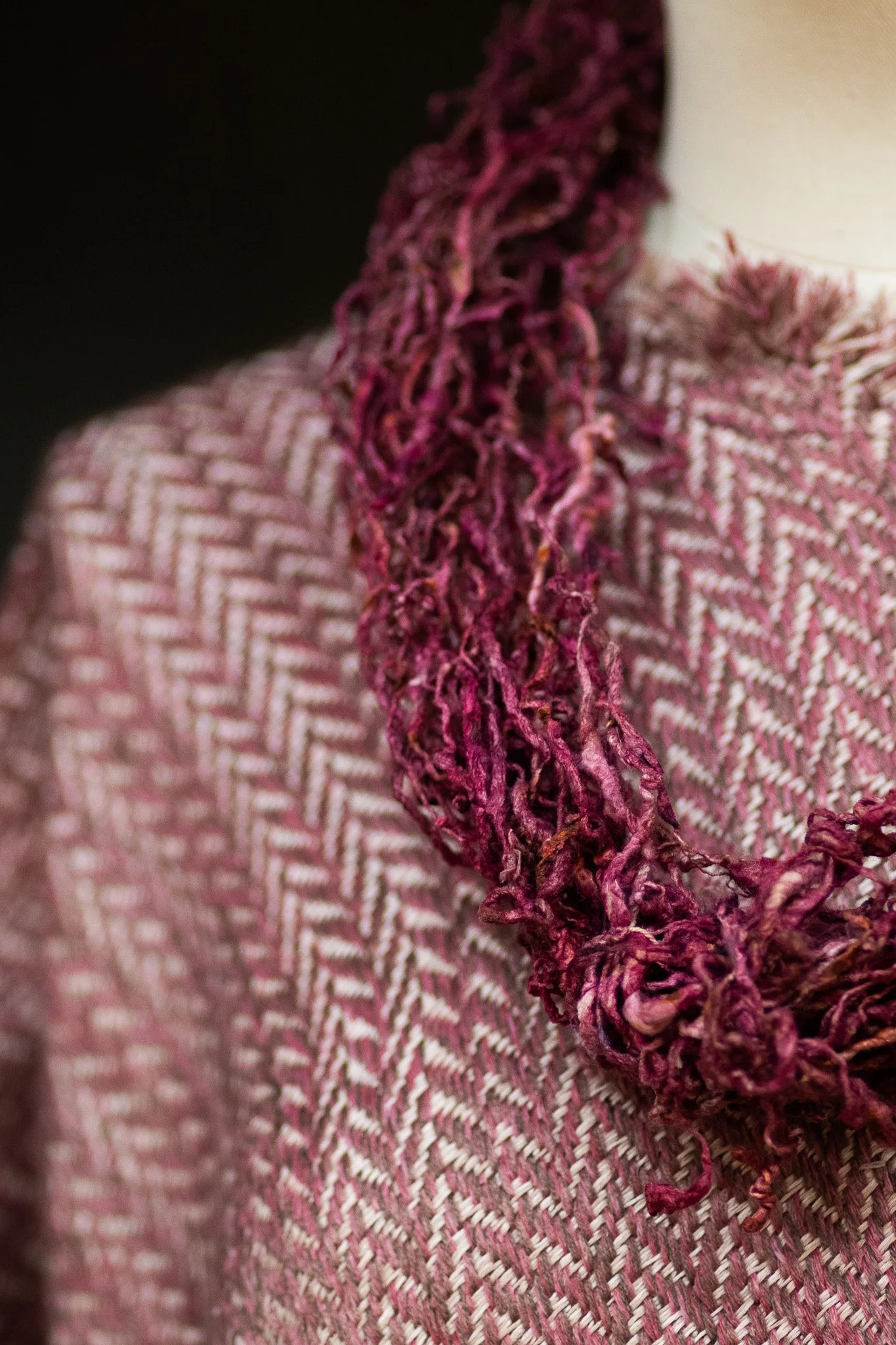
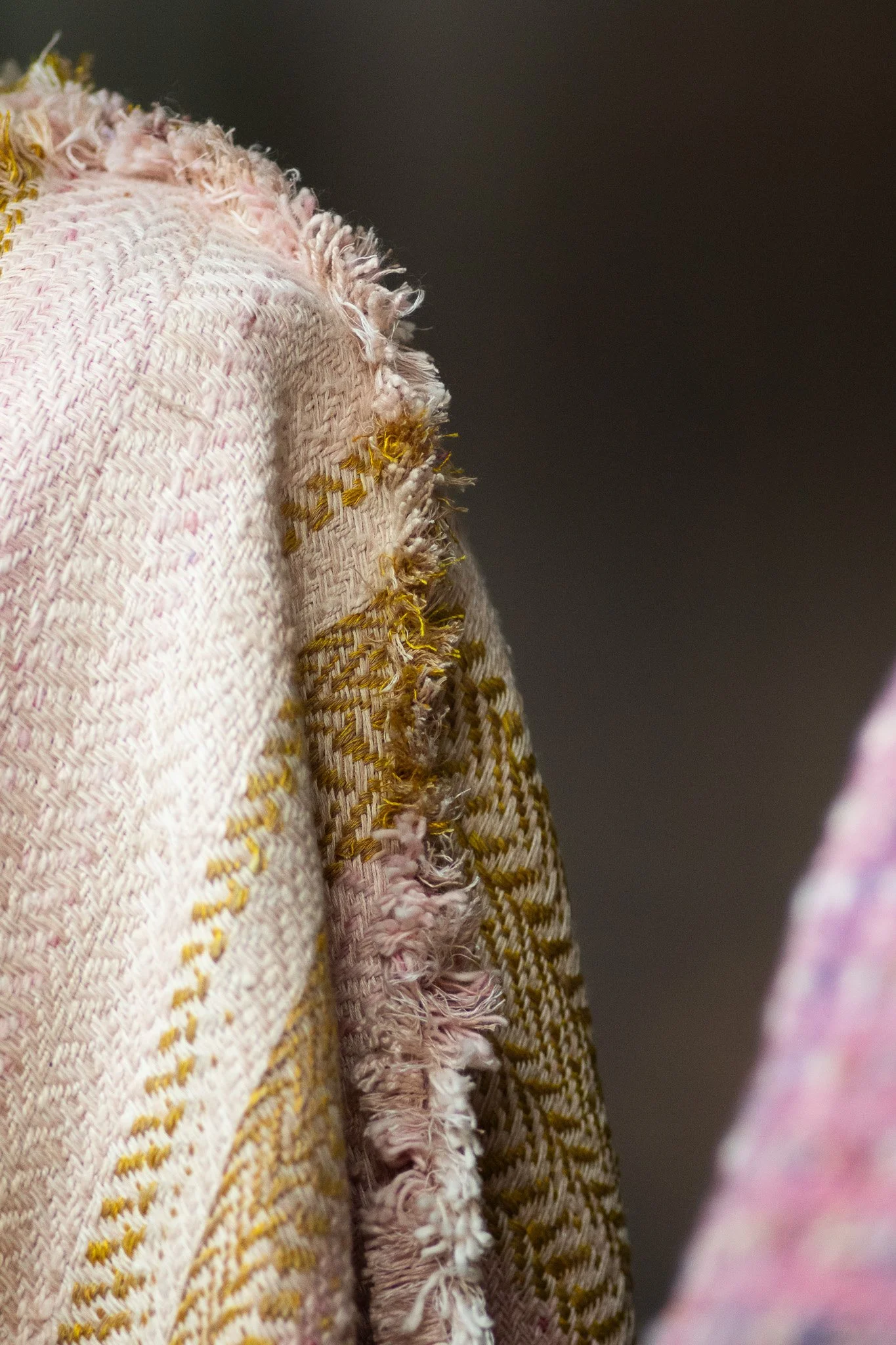
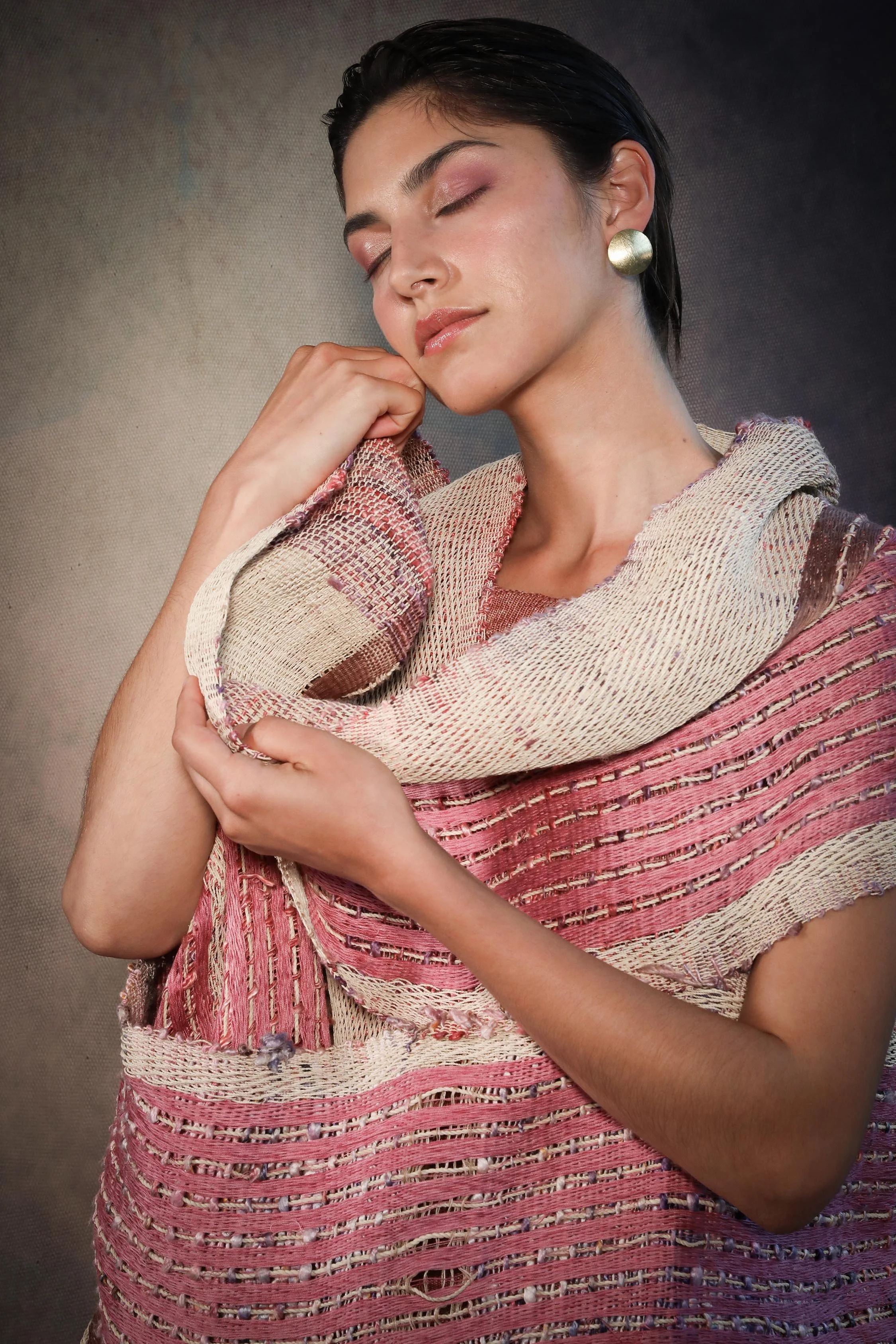
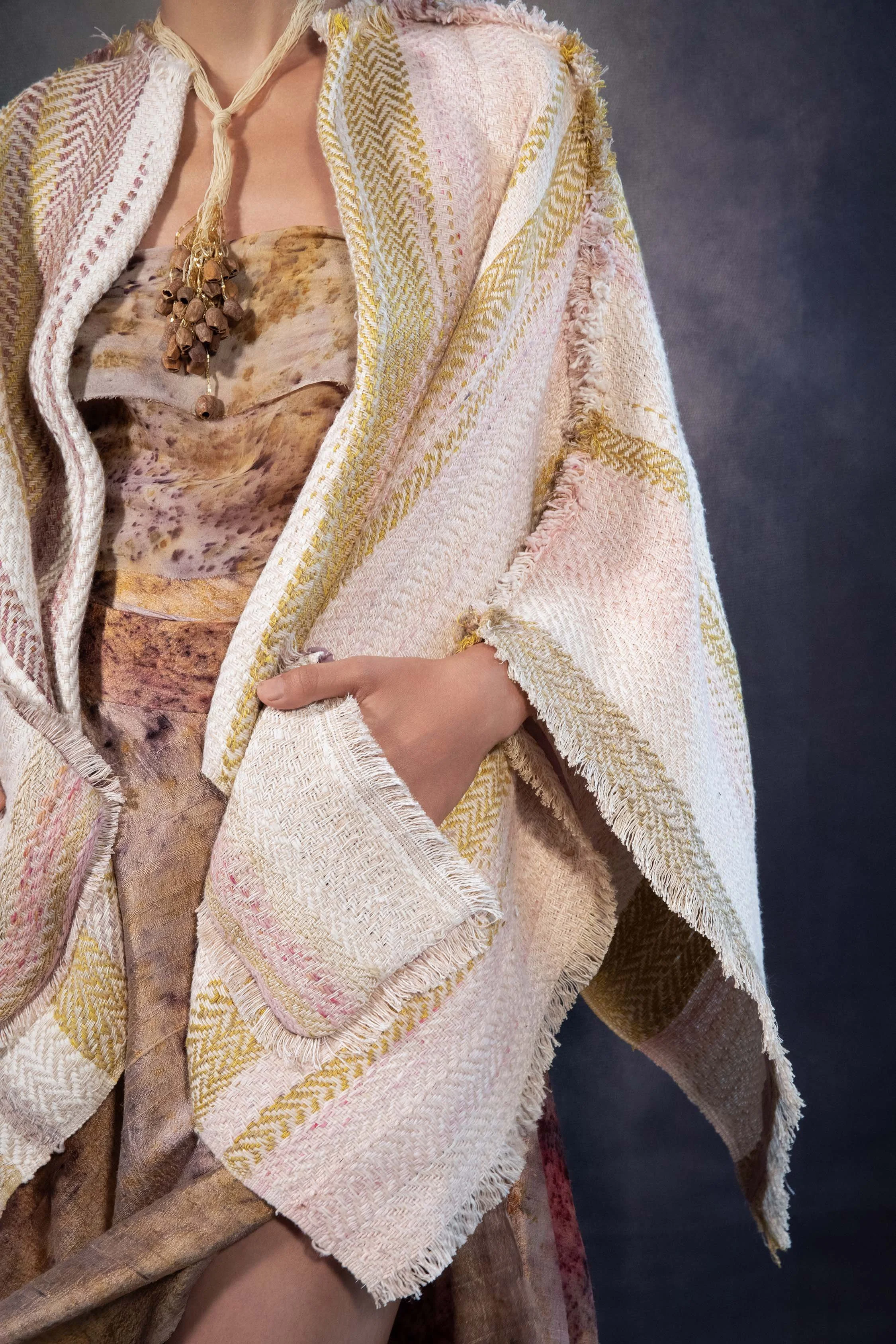
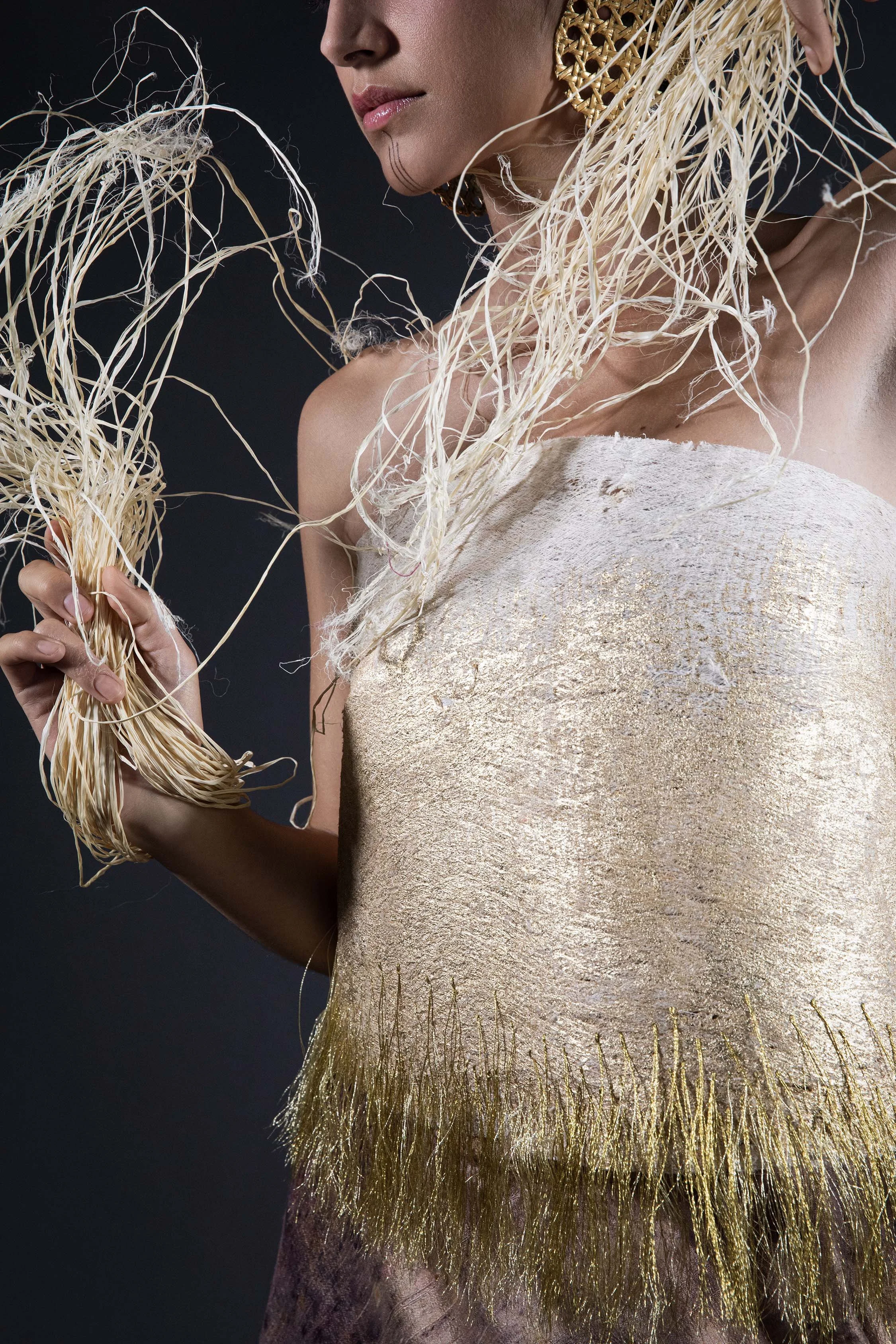
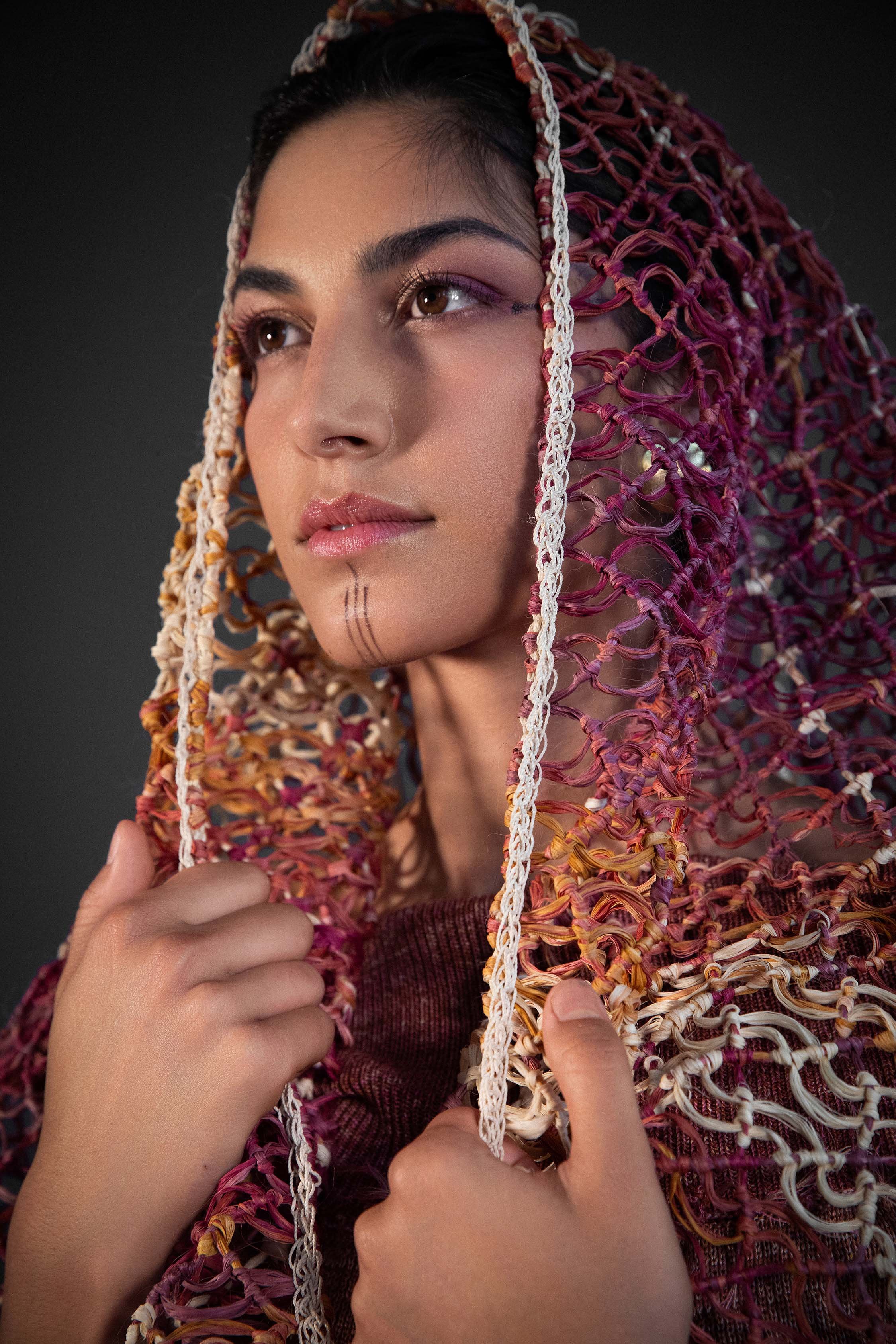
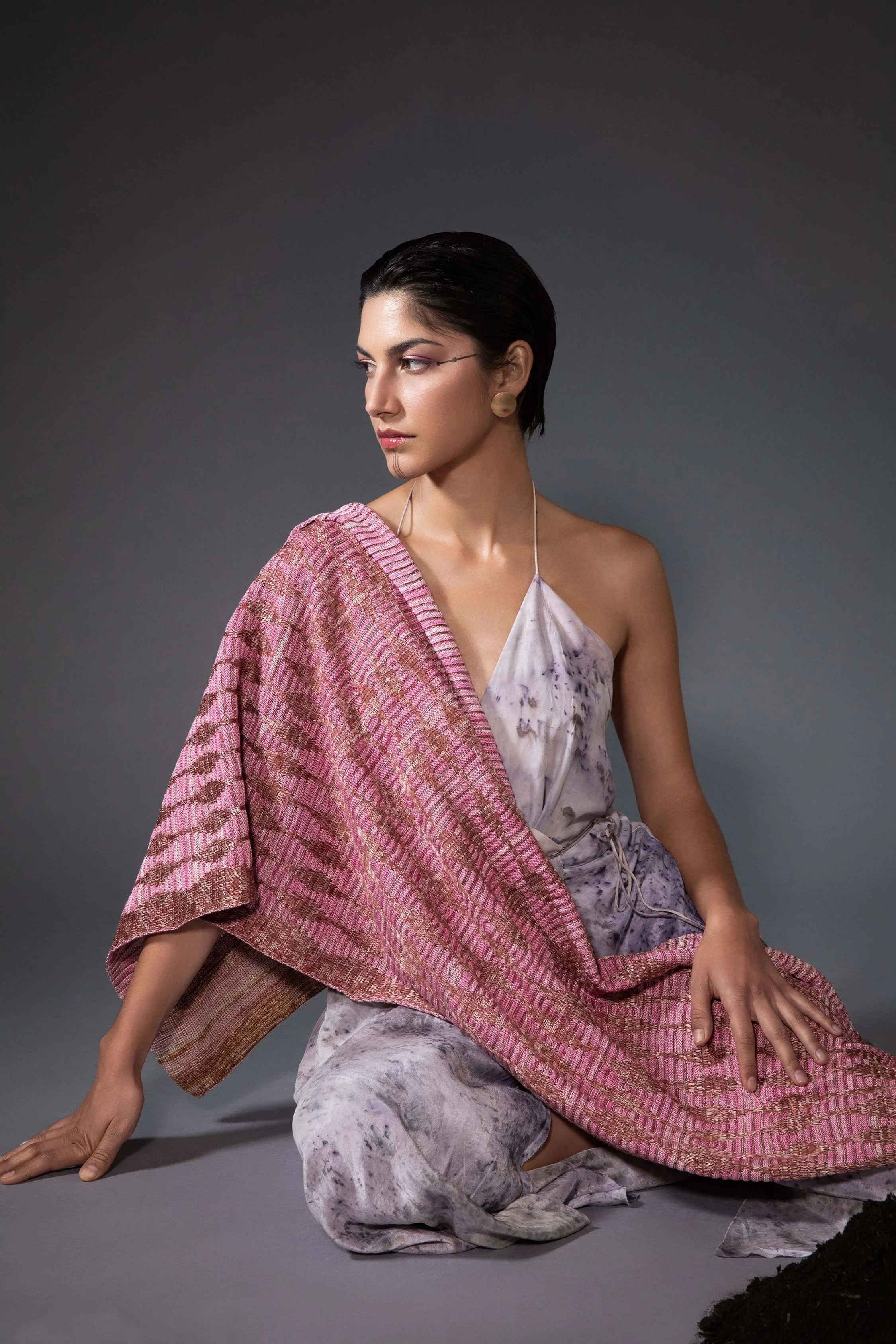
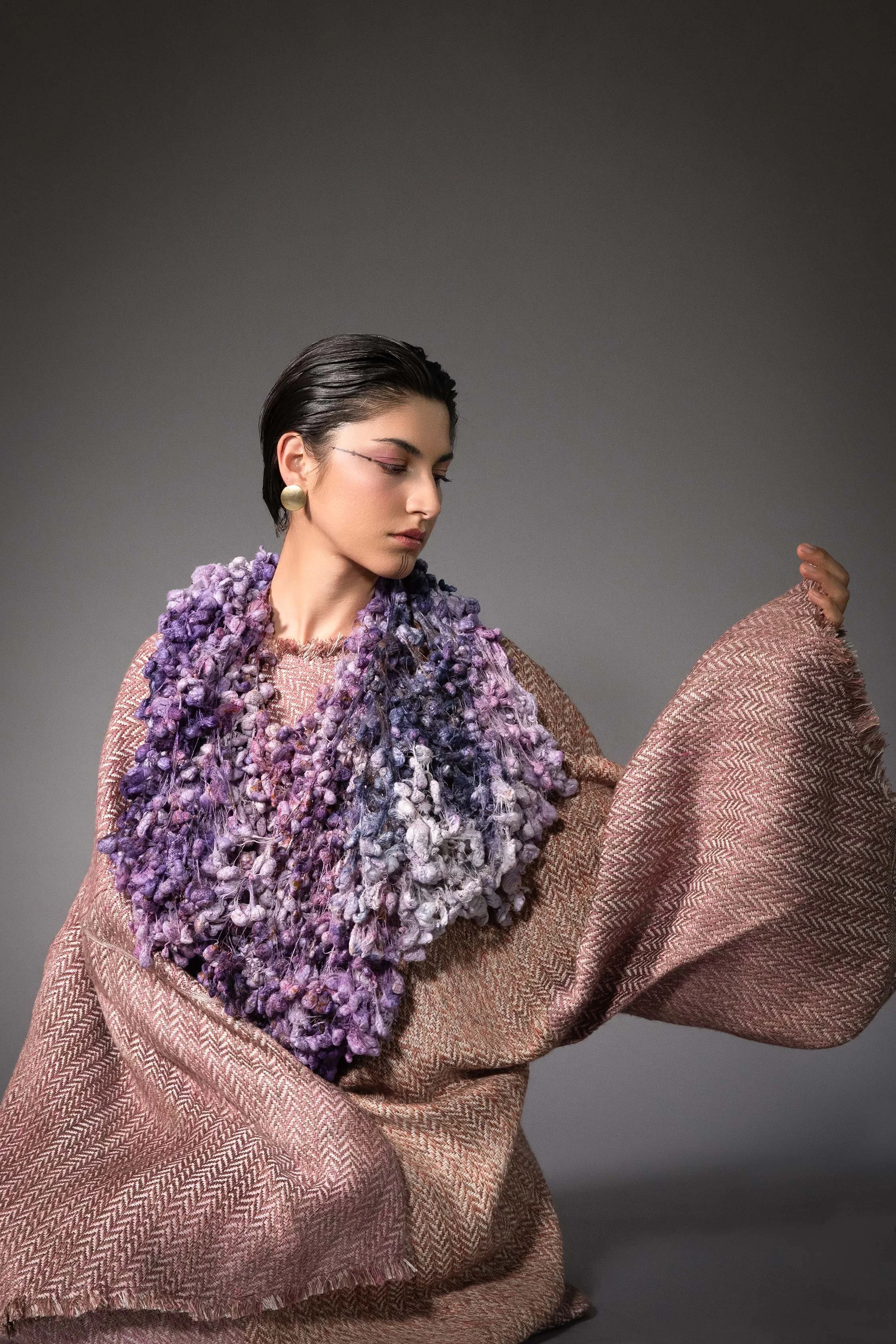
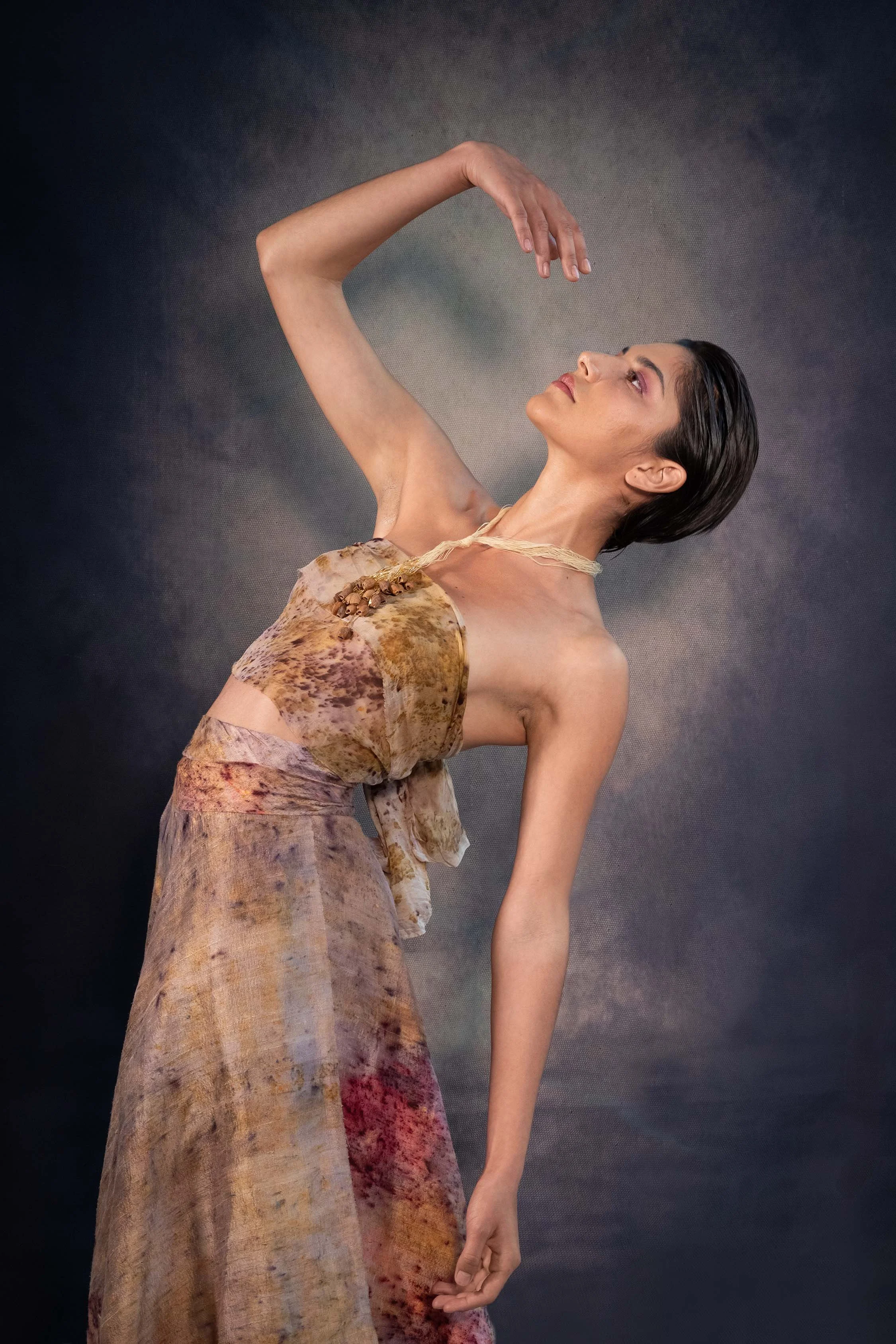
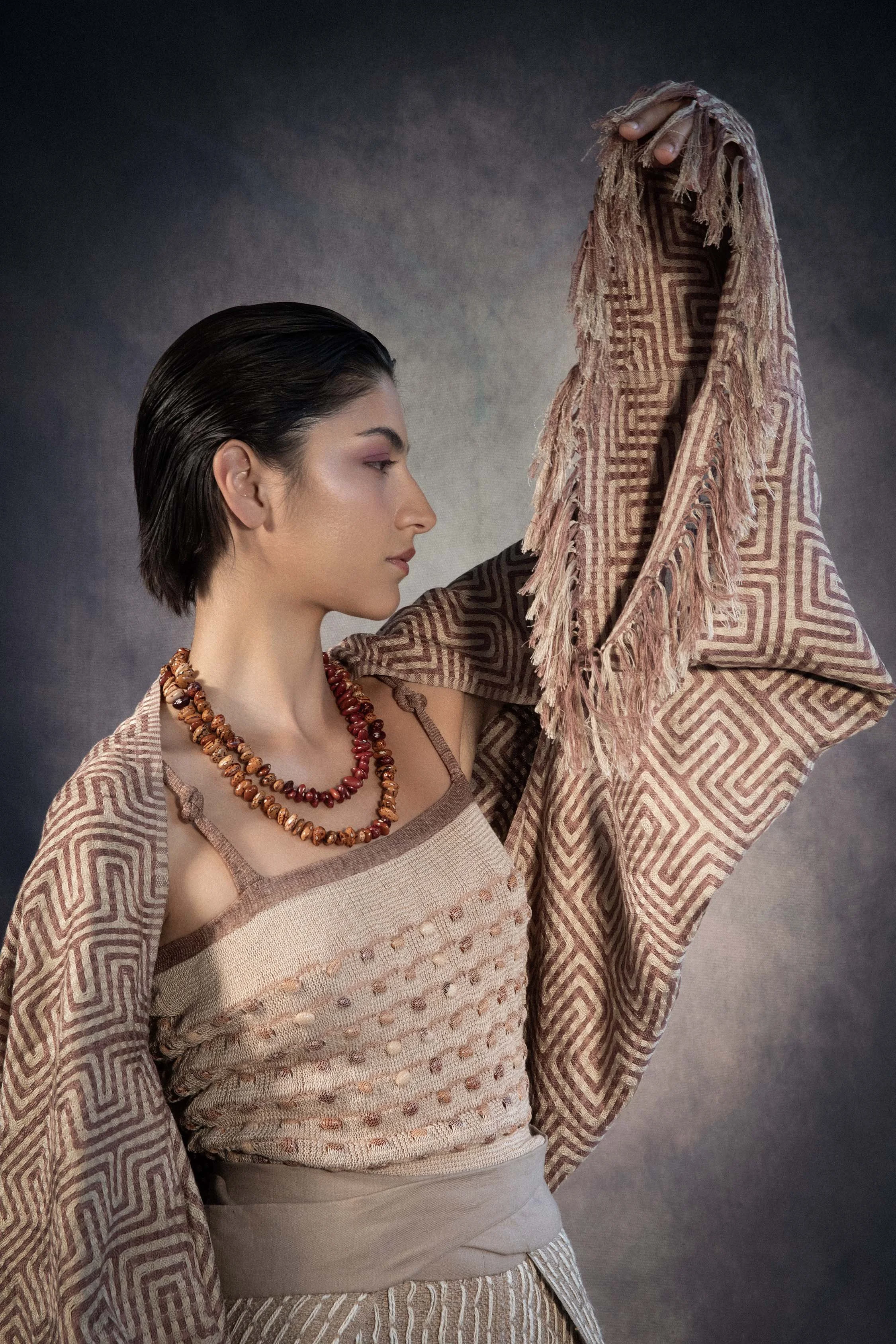
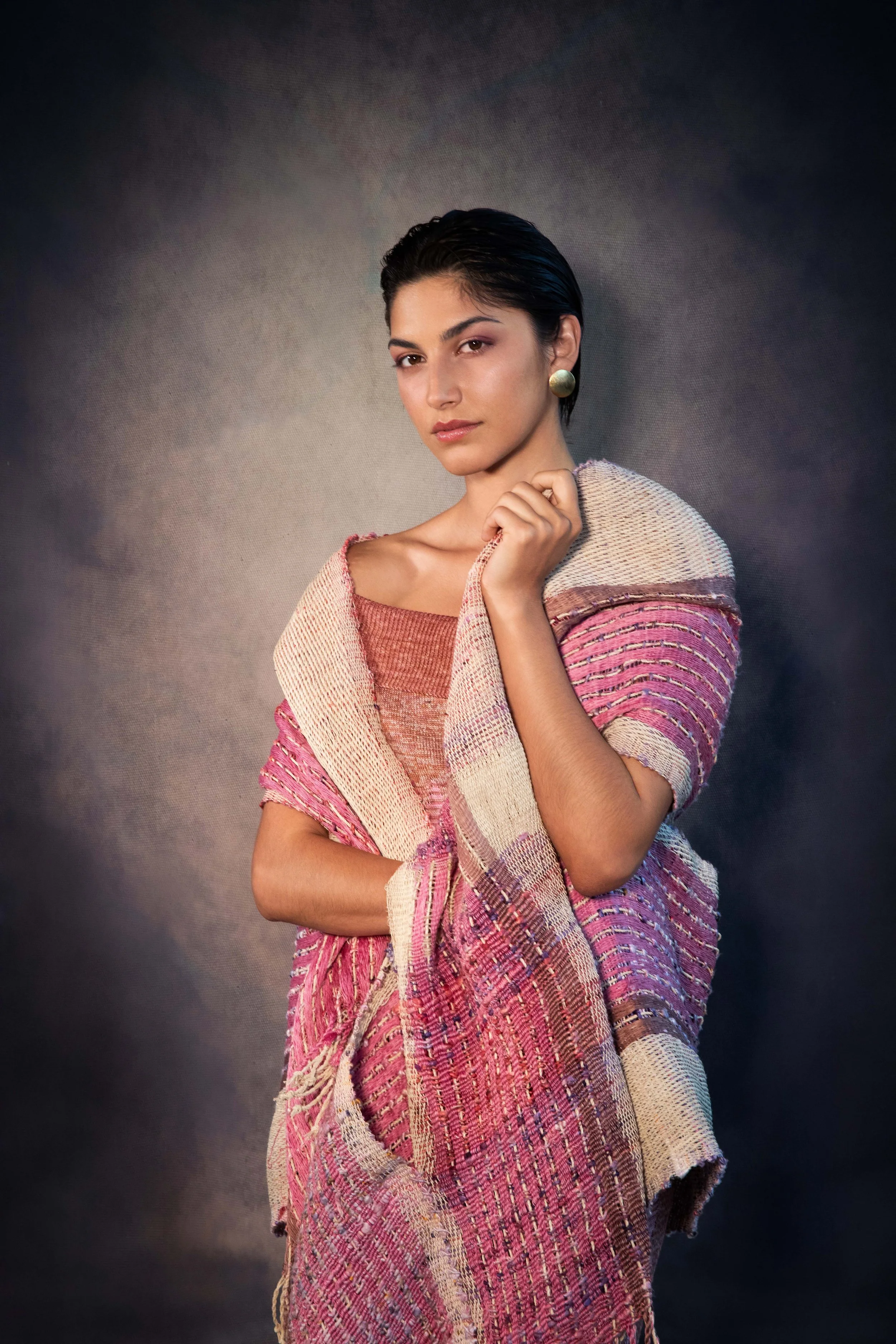
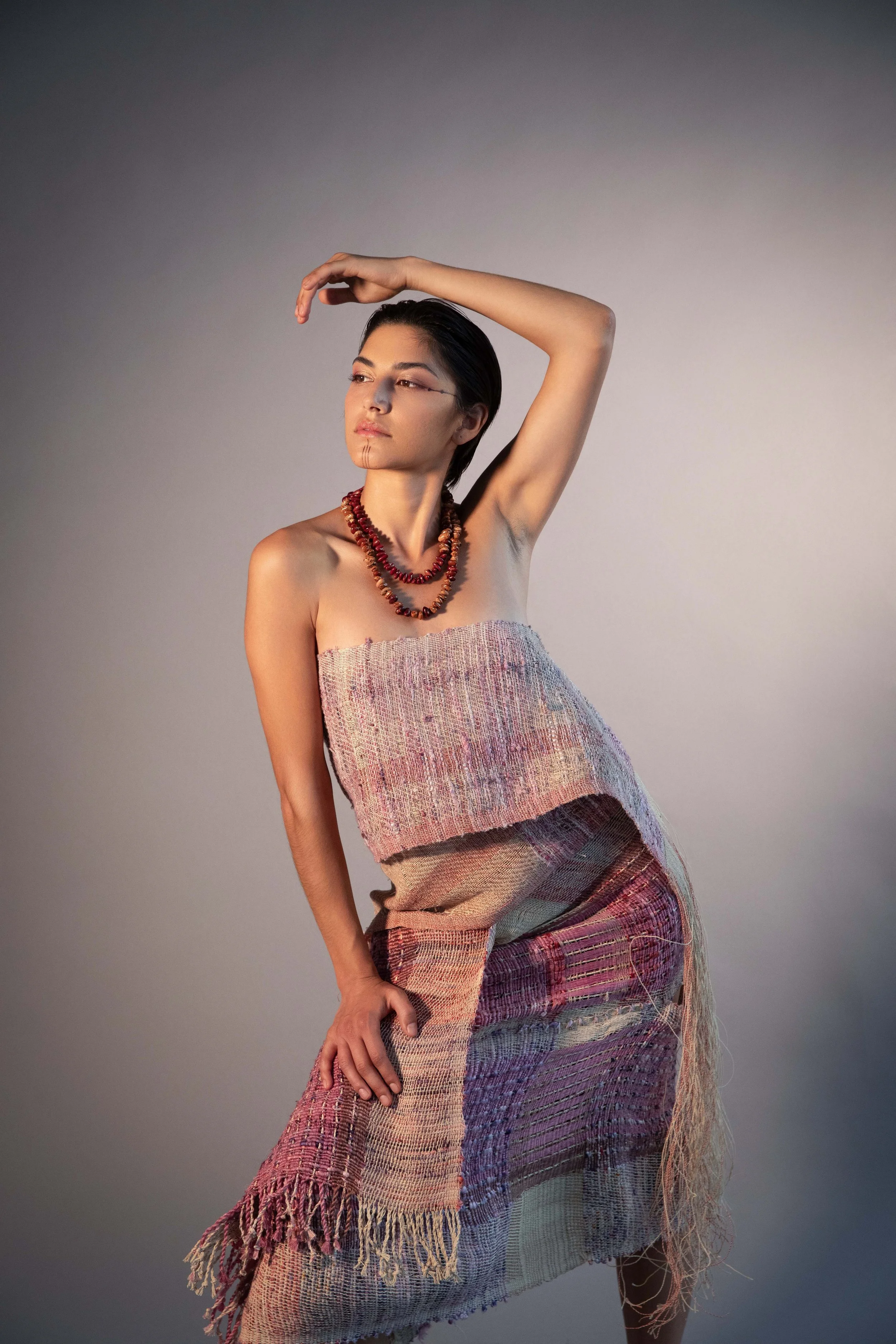
Collection by Verónica Santamaría
Photography by Natalia Peralta
Muse Gabriela Jaramillo
Hair & Make up Natasha Wellington
Assistant Daniela Morales
Mentored by Lidewij Edelkoort and Maxence Dinant